
So, you’ve been told you might need knee surgery. Or maybe you’ve already had it, and now you’re wondering what your life is going to look like a year from now.
Will you walk the same? Run? Climb stairs without wincing?
Let’s talk about that—plain and simple.
At Hip & Knee Orthopaedics in Singapore, this is one of the most common conversations we have with patients. Here’s what you really need to know about how knee surgery affects your activity long-term. We only state the facts, straight from the recovery room to real life.
The Early Days: Getting Off That Hospital Bed
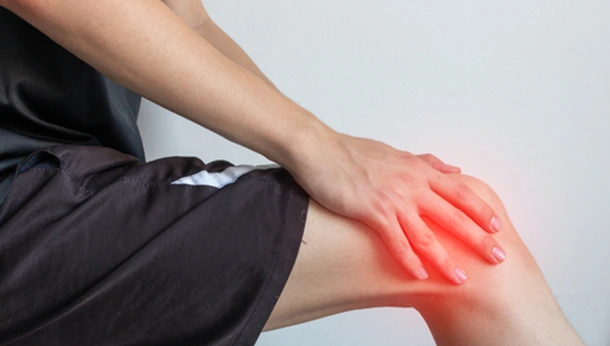
Right after surgery, you’re going to feel it. Swollen knee. Maybe some stiffness. Definitely fatigue.
You’ll probably use crutches or a walker for a few days—or weeks—depending on your surgery and your body’s pace. And yes, the idea of moving around right away sounds strange, but movement helps. Most surgeons will encourage gentle steps within 24 hours. It keeps things from locking up and lowers your risk of complications.
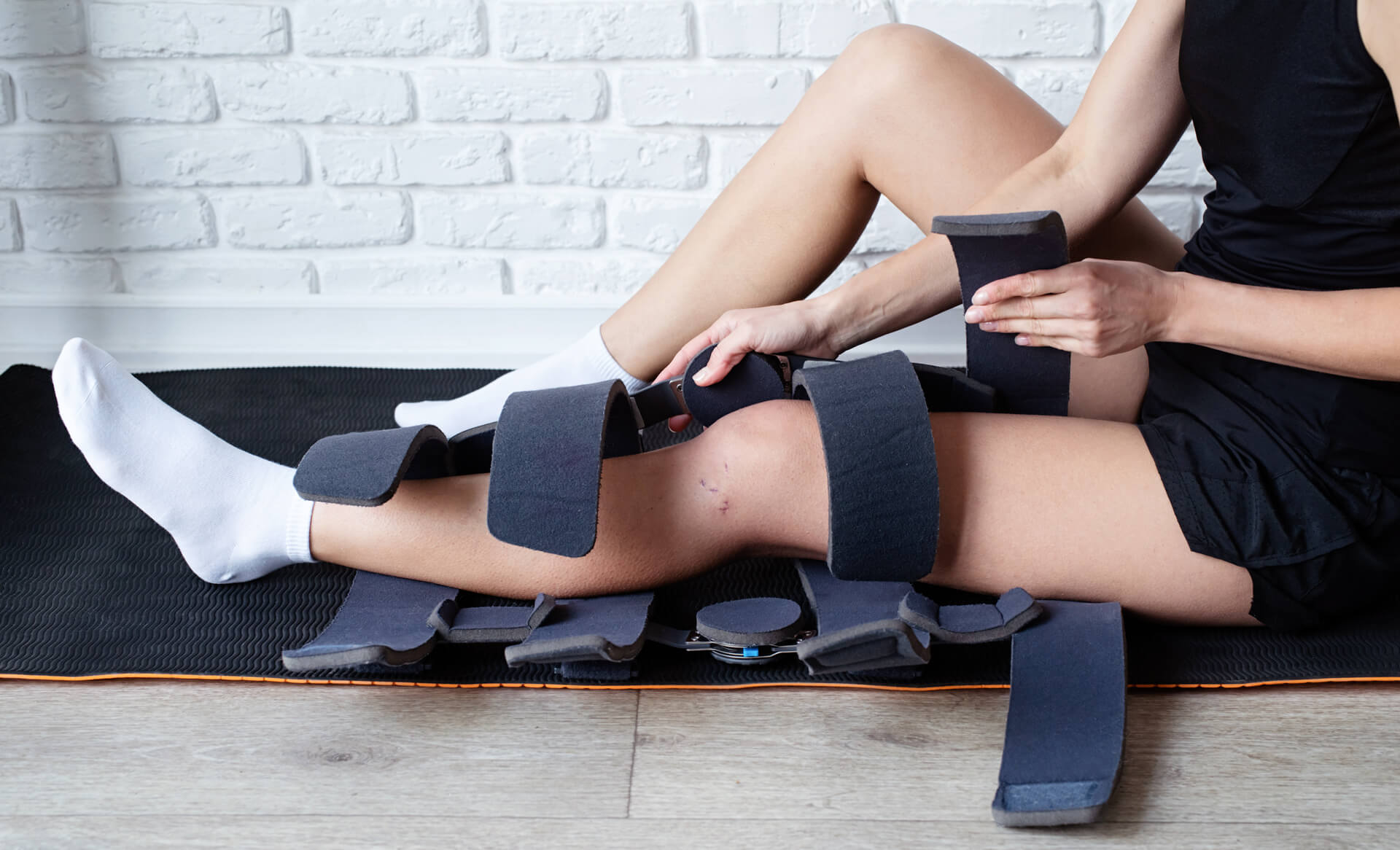
At Hip & Knee Orthopaedics, we will provide a shower cover to help with keeping the dressings dry during shower. Your knee may be fitted with a knee brace to protect the repairs that have just been done, and to protect the knee from unintended slips. Often, a cold wrap may also be issued to help reduce swelling in the postoperative knee.
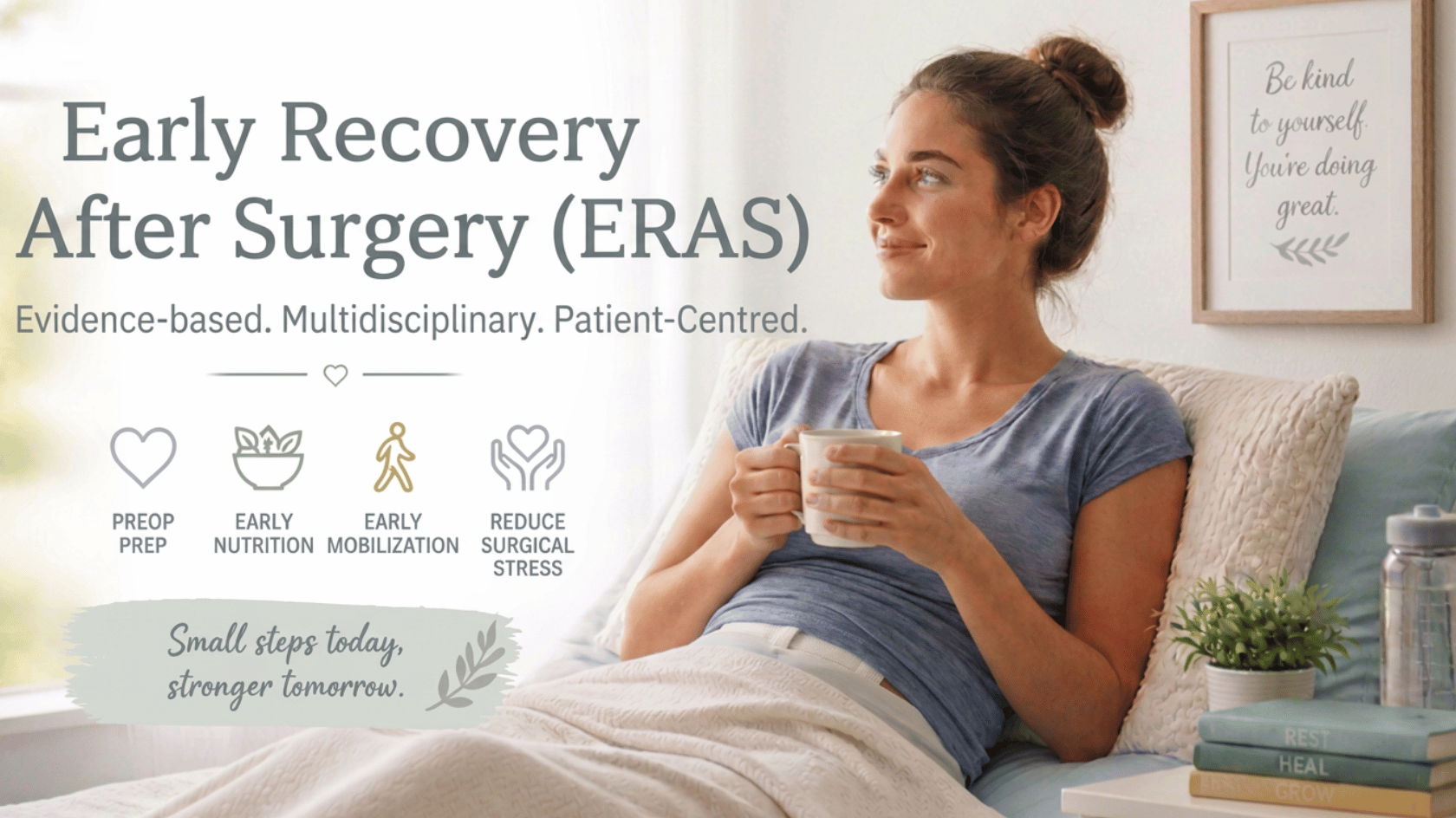
For keyhole surgeries, most patients can go home on the day of the procedure. If the procedure is done late in the day, sometimes patients stay over, and go home the next morning. For knee replacements, expect to be out of the hospital within 3 to 4 days. Some people bounce back faster, while some don’t. That’s okay.
The First 6 Months: You and Your Physio
Here’s where the work starts.
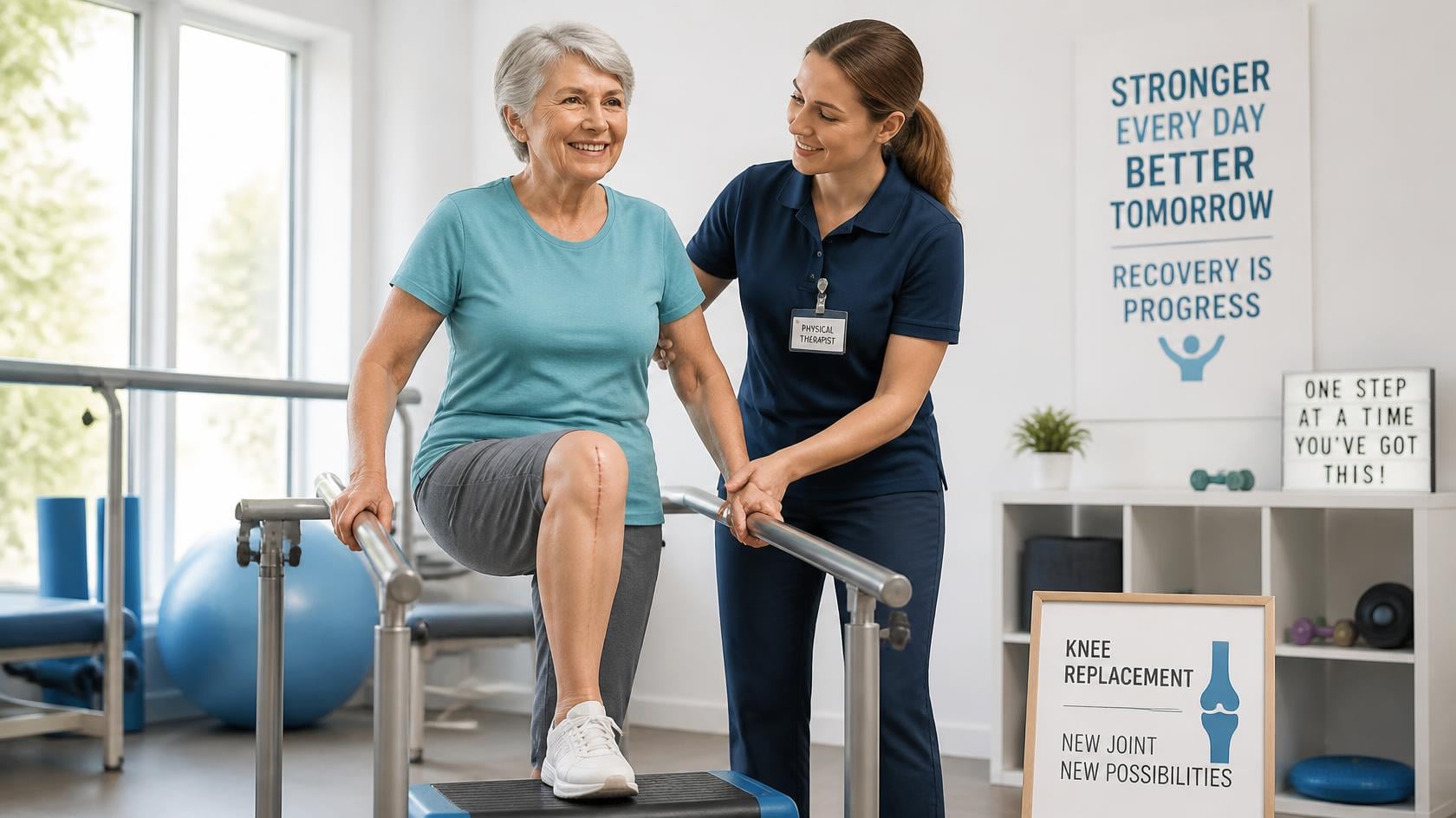
Your physiotherapist will become your second shadow—guiding you through strength training, stretching, balance drills, and the occasional reminder not to push too hard.
By week 6, a lot of patients are walking short distances without help. It might not feel graceful, but it’s progress.
A recent study by the World Journal of Orthopedics said that around 80% of people were back to their regular daily routines within 6 months of total knee arthroplasty. That includes driving, light workouts, grocery runs, and more.
A Year Later: What’s Life Actually Like?
Let’s fast-forward.
You’re one year in. The scar has faded a bit. You’ve made it through dozens of physio sessions, some good days, some rough ones.
At this point, most people are walking fine, climbing stairs without grabbing the rail, and are back to doing things like yoga, cycling, or light hiking. Some may even be dancing at weddings.
Just don’t expect to be sprinting marathons or jumping into high-impact sports. Those aren’t off-limits forever, but they do wear down the joint faster.
Knee replacements are built to last 15 to 20 years, but only if you treat them well.
No, You’re Not “Too Old” to Be Active Again
A lot of patients, especially folks in their 60s or older, think this surgery means slowing down for good.
It doesn’t.
In fact, many patients become more active than they were before surgery. When the pain goes away, people walk more, move more, and do things they used to avoid. That includes travel, tai chi in the park, and dancing at family gatherings.
Will it feel like your old knee? Not exactly. But it won’t stop you from enjoying life.
What You Can and Can’t Do
To be clear, the objective is to restore pain-free movement. Not to provide enhanced or superhuman strength.
Here’s what’s typically fine:
- Brisk walking
- Stationary biking
- Swimming
- Elliptical machines
- Yoga (gentle)
And here’s what you might want to avoid:
- Running
- Jumping
- Basketball or soccer
- Skiing (especially downhill)
These impact-heavy movements put more stress on the implant. Over time, that could mean wear and tear—and maybe another surgery.
How Everyday Life Changes for the Better
We get asked a lot about stairs, driving, travel, and going back to work.
- Stairs: You’ll probably be slow at first. But with strength, you’ll climb them like before—just maybe not two at a time.
- Driving: For most people, it’s safe within 4 to 6 weeks. Just check with your doctor if it was your right leg. We do not advise returning to driving when your knee is fitted in a knee brace. Always check with your doctor.
- Travel: For keyhole surgeries, short haul flights are not an issue. For long haul flights and knee replacement surgeries, discuss with your doctor as blood clots are a risk.
- Work: Office jobs? You might be back in 6–8 weeks. But if your job involves physical labour, plan for more time, maybe 3 to 4 months.
Also, don’t underestimate the joy of wearing regular shoes again or standing in the kitchen without pain. It’s the small stuff that reminds you progress is happening.
Tips to Keep You Moving Safely
- Don’t skip physio. Even when you’re tired or it rains.
- Eat well. Protein, greens, whole grains. Your joints heal better with nutrients.
- Use ice, rest, and elevation. Swelling still happens, sometimes randomly. It doesn’t mean you’re backsliding.
- Stretch often. Morning stiffness is normal. Don’t let it stick around.
- Keep your appointments. Your surgeon can catch early signs of wear before you feel anything.
Also: keep your weight in check. Every extra kilo puts pressure on your knee—and on your progress.
What About The Mental Side?
Recovery can be lonely and frustrating.
Some days, your body cooperates. Some days, it doesn’t. That doesn’t mean something’s wrong. It just means you’re healing.
If you’re feeling low, talk to someone. A therapist. Your physio. Your surgeon. You’re not weak for needing help. You’re smart for asking.
Final Thoughts: You’re Still In Control
Here’s the thing.
Knee surgery doesn’t take away your independence. It helps you reclaim it. But it doesn’t happen overnight. You’ll need patience, effort, and support.
At Hip & Knee Orthopaedics in Singapore, we’re not just about fixing joints. We’re about helping people move through life—literally.
Whether you’re trying to walk your dog again, travel with grandkids, or just stand pain-free while cooking dinner. We’re here for that.
If you’ve got questions or want to know what your next steps are, book a consultation. We’ll walk you through it without pressure. You will get real answers, based on real experience.