
Most people hit their fifties and start making quiet adjustments. The morning hike becomes a morning sit. The stairs get avoided. The long walk after dinner shortens, then disappears. And somewhere along the way, a thought settles in: this is just what getting older feels like.
It is an easy conclusion to reach. It is also slightly misguided.
Hip osteoarthritis affects more than 2 million people worldwide. That is a staggering number. But buried inside it is something worth paying attention to. A growing body of research shows that lifestyle factors, not the passage of time itself, drive much of that burden. Inactivity, excess weight, and years spent sitting in the same position create patterns that accumulate slowly, almost invisibly, until the hip finally begins to push back.
The pain is real. But where it comes from and what can be done about it is more encouraging than most people expect.
Why Hip Pain Happens And Why Your Age Is Not the Main Reason
Getting older does change the body. Cartilage loses some of its bounce. Muscles are slower to recover after exertion. The synovial fluid that keeps joints moving smoothly becomes a little less abundant. But none of that is catastrophic. None of it, on its own, should produce the kind of pain that stops people from living fully.
What produces pain is everything that accumulates on top of those natural changes.
Osteoarthritis develops from years of mechanical overload. Bursitis from friction that never gets addressed. Weak glutes and hip abductors; muscles most people barely think about, that quietly force the joint to absorb stress it was never built to handle alone. Labral tears that get shrugged off as “a bit of stiffness” for too long.
A study found physical inactivity as one of the most significant modifiable risk factors for the progression of hip osteoarthritis.
That distinction is worth sitting with for a moment.
Everyday Causes of Hip Pain: Sitting, Weight and Lifestyle
Nobody sets out to damage their hip. It happens through ordinary life, through patterns that feel completely unremarkable until the joint starts to show the cumulative cost.
- Excess Weight: Even modest increases in body mass substantially raise the mechanical stress on the hip during everyday activities, contributing to wear over time.
- Physical Inactivity: A lack of general movement is cited as one of the most significant modifiable risk factors for the progression of hip osteoarthritis.
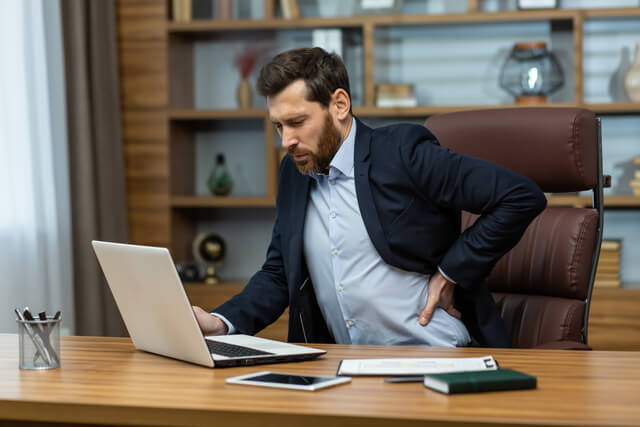
- Prolonged sitting does its damage differently. It tightens and shortens the hip flexors while effectively switching off the glutes. A desk job, a long commute, evenings on the sofa—these are not dramatic injuries. But when accumulated over years, the resulting muscular dysfunction often requires careful intervention by a physiotherapist to restore proper function.
- Smoking affects joint health in ways that rarely come up in conversation. Nicotine restricts blood flow to cartilage, tissue that already receives very little direct circulation under normal circumstances. Less blood flow means slower repair. Slower repair means faster wear.
- Disrupted sleep keeps the body in a persistent low-grade inflammatory state. That sounds abstract until you understand that inflammatory cytokines, the chemical signals that flood the body during poor sleep, directly degrade cartilage over time. Chronic pain and poor sleep also have an uncomfortable tendency to reinforce each other. One makes the other worse. Breaking that cycle often requires addressing both at once.
Exercises That Help, and a Few Worth Approaching Carefully
The research here is detailed and consistent: movement is medicine for the hip. Not intense, punishing movement, or ones that require a gym membership or a personal trainer. Just the right exercises, done with reasonable regularity.
- Clamshells: Lie on your side with knees bent and feet stacked, lifting the top knee slowly like a clamshell. This targets the gluteus medius, a key stabiliser of the pelvis. Start without resistance, adding a light band around the thighs once the movement becomes easy.
- Glute Bridges: On your back with feet flat, lift the hips towards the ceiling, engaging glutes and hamstrings to absorb forces that would otherwise stress the hip joint. Lower slowly and avoid arching the lower back. Those uncomfortable on the floor can try this on a firm mattress.
- Side-Lying Hip Abductions: From the same side-lying position, lift the top leg straight up about 45 degrees, focusing on controlled lowering. Stability and slow descent maximise glute activation.
- Swimming and Water Aerobics: Water reduces joint load while allowing a full range of movement. Ideal for those with pain limiting land-based exercise, providing both cardiovascular and muscular benefits.
- Walking on Even Ground: Simple, regular walking distributes synovial fluid, keeping cartilage nourished and mobile. Thirty minutes at a comfortable pace most days is sufficient; choose flat surfaces and supportive footwear.
- Seated Hip Flexor Stretches: Sitting at the edge of a firm chair, extend one leg behind you until you feel a mild stretch in the hip flexor. Hold twenty to thirty seconds, then switch sides. This counteracts tightness from prolonged sitting and can be done almost anywhere.
- Approach with Care: High-impact running, deep squats without adequate mobility, or movements causing sharp groin or hip pain should be paused while discomfort persists. Pain that feels specific and mechanical is a signal the body is communicating, not something to override.
When It Is Time to See a Hip Specialist in Singapore?
Lifestyle changes genuinely help most people, and for many, they are enough. But some situations need a trained clinical eye, and waiting too long to seek one can quietly reduce the options that remain.
It is worth booking a consultation if hip pain has persisted for more than six weeks without meaningful improvement. If walking for ten minutes or managing a flight of stairs has become a real effort, that matters. Night pain, pain that wakes you from sleep or makes it hard to fall asleep in the first place, is clinically significant and should not be written off as normal ageing. A persistent grinding, clicking, or catching sensation in the joint during movement also deserves proper assessment rather than hopeful waiting.
Read: Prevent Further Hip or Knee Injury While Waiting for Your Clinic Visit
Hip & Knee Orthopaedics in Singapore works with patients across a full spectrum of hip conditions. From early-stage discomfort to more complex presentations, our team approaches each case individually, with conservative management explored thoroughly before anything more involved is considered. Getting a hip evaluation early is not an overreaction. More often than not, it is what can help you keep more significant intervention off the table.
The Hip Responds Well to Being Looked After
Hip pain does not have to become a fixed feature of later life. The habits that accelerate joint deterioration, sustained inactivity, excess load, and chronic inflammation, are not permanent. They shift with consistent, considered effort.
Start somewhere small. A walk after dinner. Glute bridges before bed. Get up from the desk every hour and move for five minutes. None of these feels significant in the moment. Over months and years, they add up to something the research measures clearly: less pain, better function, and a joint that holds up far longer than it would have otherwise.
Age is a fact. What you do with your body is still, largely, a choice.
This article was reviewed by Dr Adrian Lau, Specialist Orthopaedic Surgeon at Hip & Knee Orthopaedics.