
The onset of joint discomfort is often subtle and easy to underestimate. Many individuals experience mild symptoms that come and go, assuming they will resolve on their own. When they persist, it can feel unexpected. In reality, these symptoms are usually the result of gradual, age-related changes that have been developing beneath the surface over time, including issues related to aging joints.
The Joint Is Not Just a Hinge
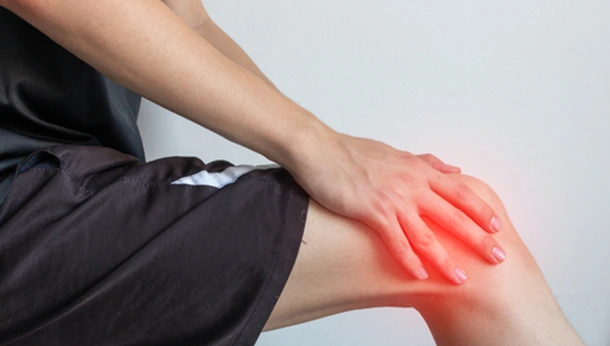
Most people picture a joint as two bones meeting. That is technically true, but it misses almost everything that matters. Between those bones is cartilage, a firm, slightly springy tissue that takes load, absorbs shock, and allows smooth movement. Around the joint is a capsule filled with synovial fluid, which lubricates the surfaces the way oil lubricates an engine. Holding everything in position: a network of ligaments, tendons, and muscle that does more than most people realise. Here is a muscle problem with cartilage. It has no blood supply. Because of that, its ability to repair itself is very limited compared to other tissues, as there is no direct circulation bringing repair cells to the site. Instead, cartilage depends on movement, the compression and release of walking, bending, shifting weight, to draw nutrients from the surrounding synovial fluid. Without regular movement, this nutrient exchange becomes less efficient. Move with poor mechanics or too much load for too long, and it wears faster than it can compensate. From midlife onwards, that compensation slows further. Cartilage thins. The synovial fluid changes, and becomes less effective, in both composition and lubricating properties. The body sometimes tries to stabilise an increasingly worn joint by growing small bony spurs, osteophytes, around the margins. These rarely help. Often, they add stiffness and catch in ways that make movement more uncomfortable. Meanwhile, muscle mass declines. The process has a name: sarcopenia, and it begins earlier than most people expect. The quadriceps, which wrap around and support the knee, can lose meaningful strength through your fifties and sixties if you are not actively counteracting the loss. As that happens, the joint takes more of the load directly. It is not designed to do that indefinitely. None of this means your joints are failing. It means they are ageing joints. The difference matters, because one implies catastrophe and the other implies management.
The Symptoms People Put Up With Too Long
Joint decline rarely gives you a clear signal. There is no alarm. What happens instead is a gradual negotiation. You adjust your walking route, you take the lift instead of the stairs, you quietly stop doing things that hurt, and one day you realise the negotiation has been going on for two years.
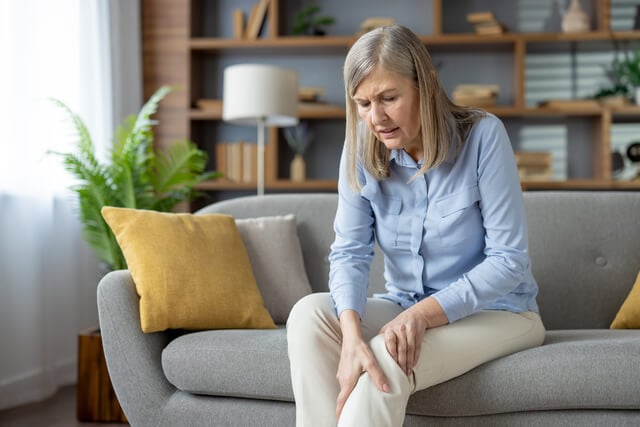
Early symptoms are frequently overlooked, often for understandable reasons. Mild morning stiffness that resolves with movement, discomfort after prolonged standing, or occasional joint clicking are common and typically intermittent. In the early stages, these symptoms often improve with rest.
The pattern is what matters. Stiffness that used to last five minutes and now takes forty minutes to ease. Swelling that appears after activity, then more activity, then even light activity. A walk that you could complete without thinking about it last year, that now requires pain relief medication and rest built in.
Some symptoms are worth acting on immediately rather than waiting out:
- Pain that wakes you at night: Not discomfort when you roll over, but pain that pulls you out of sleep. This suggests active inflammation or structural change. That warrants imaging, not patience.
- A joint that gives way: A sudden sensation of buckling when stepping or changing direction may indicate instability related to soft tissue structures or muscle weakness. While sometimes linked to specific structural issues, it should be assessed, as many underlying causes are manageable when identified early.
- Morning stiffness lasting more than thirty minutes: This particular detail, seemingly minor, is clinically meaningful. It points away from mechanical osteoarthritis and towards inflammatory arthritis: rheumatoid, psoriatic, or related conditions. These require a fundamentally different treatment. Getting this distinction right early avoids months of treating the wrong condition.
Why the Knees and Hips Carry the Most Risk
It is not coincidence that the two joints most commonly replaced are the ones doing the most work.
With each step you take, your knee absorbs roughly three to six times your body weight. On stairs, that multiplies. The hip bears the entire load of your upper body plus the forces your muscles generate during movement. Both joints have large cartilage surfaces that must perform, day after day, across decades.
The hands and lumbar spine are also commonly affected. The finger joints, in particular, can become significantly painful and deformed in cases of inflammatory arthritis. However, it is the knees and hips that most directly influence independence, determining whether a person can rise from a chair, walk to the hawker centre, or navigate stairs without relying on railings. This is the functional territory at stake.
What the Numbers Confirm
The scale of this problem globally is larger than most people realise.
The World Health Organization estimated in 2019 that 528 million people worldwide lived with osteoarthritis—nearly double the number recorded in 1990. That rise is not fully explained by better diagnosis. It reflects an older, heavier, more sedentary global population. Research has also consistently ranked musculoskeletal conditions among the fastest-growing sources of disability worldwide.
In Singapore, musculoskeletal conditions are a leading cause of chronic pain in older adults, and the burden is projected to grow as the population ages. This study reports that by age 65, roughly half of all adults show X-ray evidence of osteoarthritis in at least one joint, though how much pain or limitation this causes varies enormously between individuals.
The point is not to frighten. It is to normalise the conversation. This is common. It is treatable. And earlier attention consistently produces better outcomes.
Read: Bone Conditions in Old Age: Common Issues That Creep Up in Later Years
What Actually Helps
The most important thing to understand about joint pain is that rest is not the default answer.
Cartilage, having no blood supply, depends on movement for nutrition. Prolonged rest starves it of what it needs and stiffens the surrounding tissue. Patients who stop moving because movement hurts often find, weeks later, that they hurt more and can do less. The cycle is well-documented and hard to reverse once established.
Low-impact exercise is the evidence-based recommendation. Swimming removes body weight from the equation entirely and allows strengthening without joint loading. Cycling builds the quadriceps, which protect the knee without the impact of running.
Hydrotherapy, activities performed in water, is particularly useful for people whose pain is severe enough to limit land-based movement. Even thirty minutes of flat-surface walking most days produces measurable improvements in pain and function for people with mild to moderate osteoarthritis.
Weight is the other major lever, and the numbers are blunter than most people expect. Each kilogram of excess body weight adds approximately three to four kilograms of force to the knee joint with every step. Losing five to ten percent of body weight (not a dramatic transformation, a meaningful reduction) consistently produces significant reductions in knee pain.
Diet is not a cure, but it is not irrelevant either. Oily fish: salmon, sardines, mackerel, provide omega-3 fatty acids with established anti-inflammatory effects. Leafy greens, berries, and olive oil appear across essentially every anti-inflammatory eating pattern for good reason. Vitamin D deficiency is worth checking specifically in Singapore, as despite the climate, indoor lifestyles and deliberate sun avoidance are common, and low Vitamin D is associated with faster cartilage deterioration. It is an easy thing to test and address.
Small mechanical habits accumulate over decades. Years of deep squatting on hard floors, walking in unsupportive footwear, or sitting for long hours with poor posture all contribute to wear patterns that arrive slowly and leave a lasting mark. Being thoughtful about these things is not excessive caution; it is maintenance.
When to Stop Waiting
The patients who arrive at the clinic having self-managed for two or three years are the hardest to help, not because it is too late, but because the window for the most conservative options has narrowed. Options that would have been straightforward eighteen months earlier are now more complex. That is the cost of waiting.
Most people wait because they assume pain is just part of getting older. Some of it is. But pain that affects your sleep is not something to manage with paracetamol and willpower. Pain that has quietly narrowed what you do; the walks you no longer take, the activities you have stopped mentioning, is pain that deserves assessment.
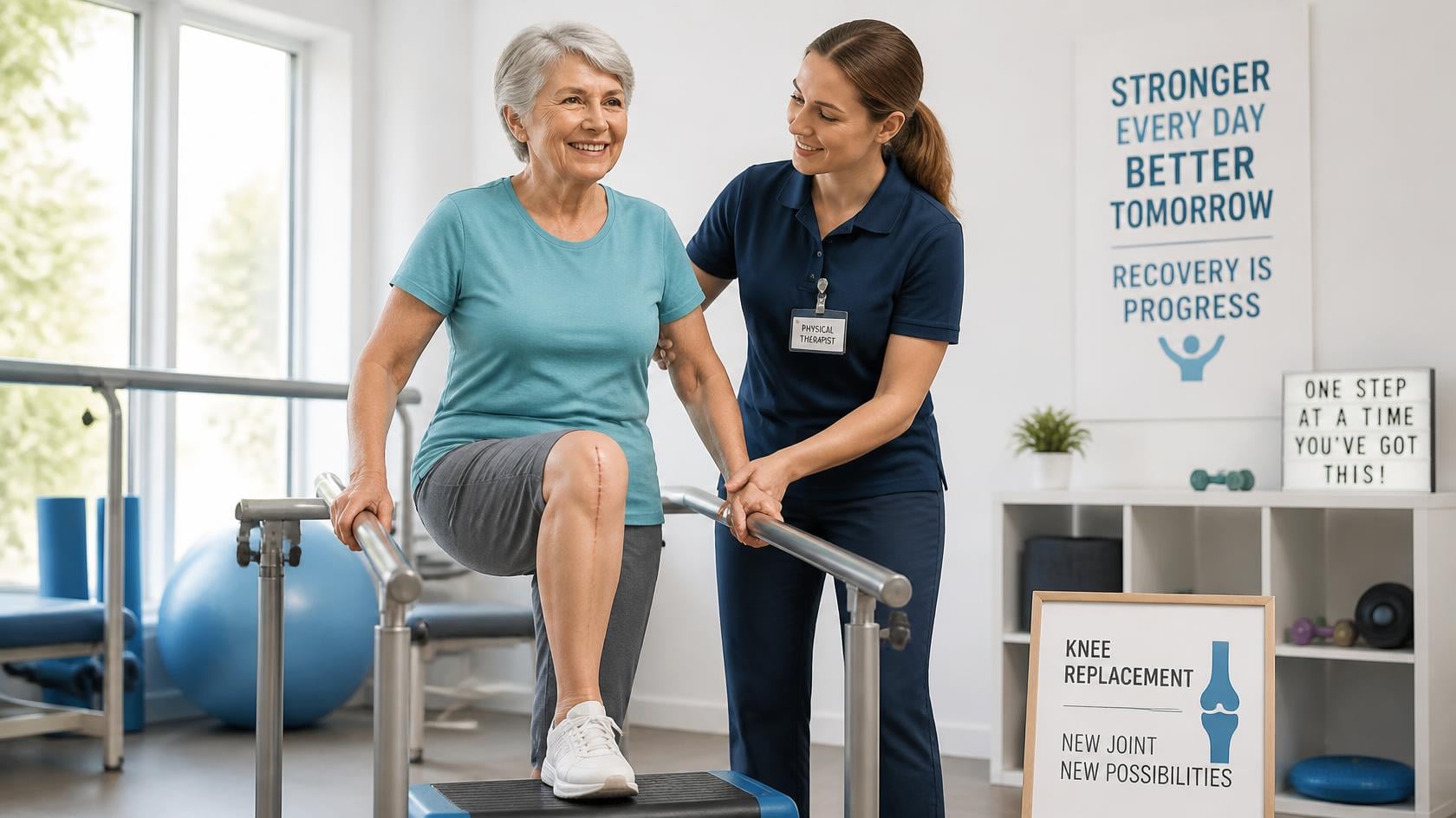
A proper evaluation tells you what is actually going on: the degree and type of cartilage loss, the presence or absence of inflammation, and whether what you have is osteoarthritis or something else entirely. That clarity changes what you do next. Management plans built on accurate diagnosis, including physiotherapy, activity modification, targeted injections, and surgical intervention where genuinely indicated, work. Plans built on guesswork do not.
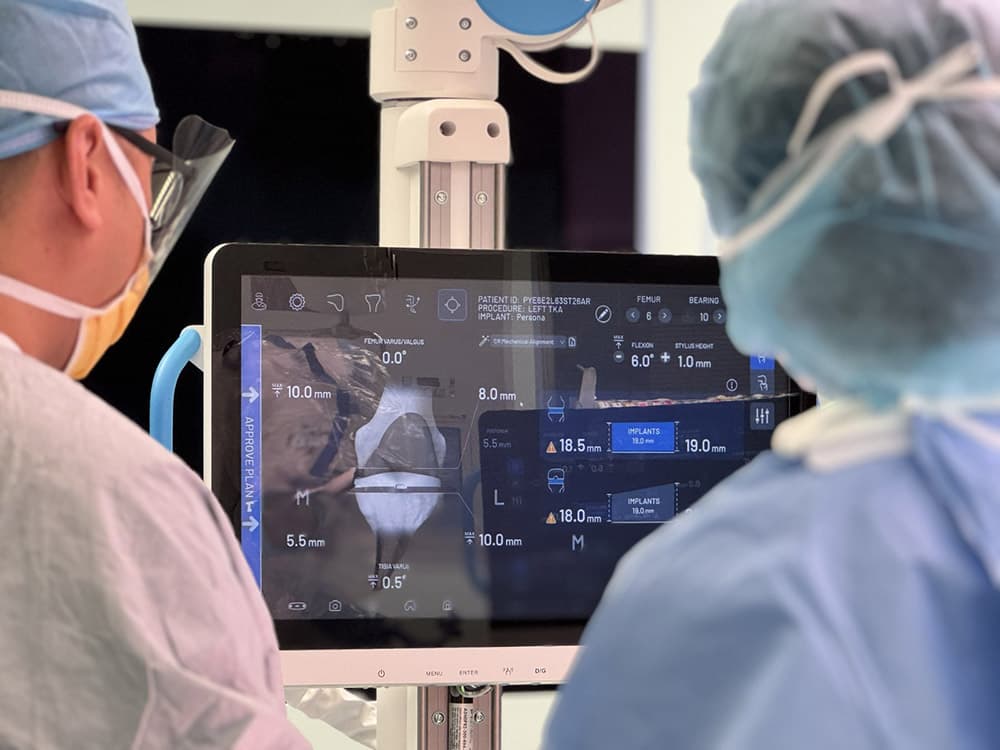
Surgery is not the default. For the right patient at the right stage, it is transformative. For most people in the earlier stages, it is not needed, provided the right non-surgical guidance is in place and followed.
One Last Thing
Your joints have taken you a long way. The fact that they are changing is not a sign of failure. It is what happens in a body that has been used.
The patients who fare best are rarely the ones who escaped joint problems. They are the ones who took them seriously at a manageable stage, made consistent adjustments, and got good advice before small changes became large ones.
If your knees or hips have been speaking to you through stiffness, through aches that linger a little longer each time, through limits you have started quietly accepting, it is worth listening properly.
The team at Hip & Knee Orthopaedics is here to give you an honest picture of what is happening and what your options are. That conversation, whenever you are ready for it, is a worthwhile one.
This article was reviewed by Dr Adrian Lau, Specialist Orthopaedic Surgeon at Hip & Knee Orthopaedics.