If hip pain, stiffness, or difficulty sitting is affecting your daily routine, a proper hip evaluation is the first step towards relief. At Hip & Knee Orthopaedics, our experienced orthopaedic surgeon will assess your symptoms, identify the underlying cause, and recommend the treatment option best suited to your condition, from non-surgical care to surgery where needed.
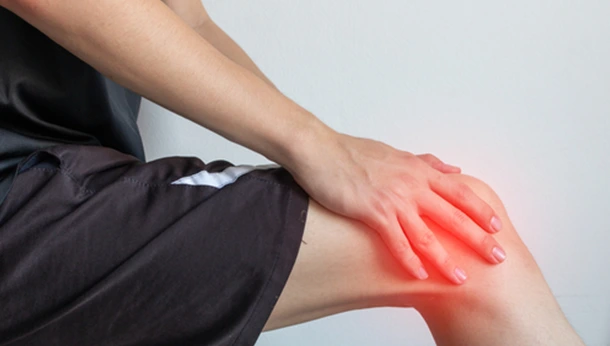
Occasional hip discomfort after a long walk or a strenuous workout is common and often settles with rest. Hip pain that lingers, keeps coming back, or starts to limit your daily activities may be a sign of an underlying problem that needs medical attention. Getting an early evaluation can help identify the cause before the condition progresses, and often means more treatment options, including non-surgical ones.
Hip Symptoms and Evaluation
Hip problems don’t always show up as obvious pain in the hip itself. Because the hip joint sits deep within the body, symptoms can appear in the groin, the side of the hip, or even as changes in how you move.
Problems of the hip often show up in one of these ways:
Pain in the groin, especially when squatting or getting up from the floor or a low stool.
Pain over the outer side of the hip.
Difficulty with everyday activities such as tying shoelaces or cutting toenails.
A feeling that one leg is shorter than the other.
If your pain is mainly over the back of the hip or the buttock, the cause is more often the lower (lumbar) spine than the hip joint itself.
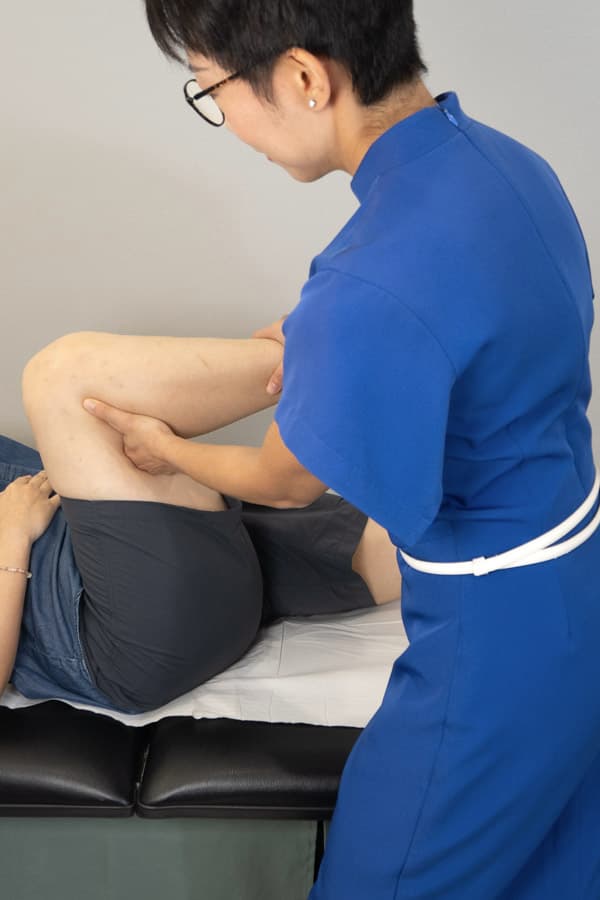
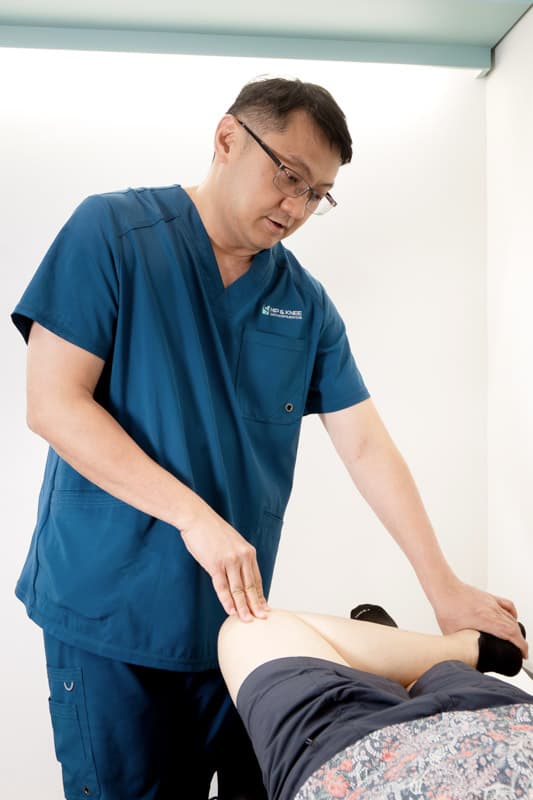
Because hip pain can come from several sources, including the joint, the surrounding soft tissues, or the spine, a proper evaluation is important to find the actual cause. During your consultation, our orthopaedic surgeon will review your symptoms, examine your hip’s movement and strength, and arrange imaging such as X-rays or an MRI if needed. This makes sure your treatment targets the real source of the problem rather than just the symptoms.
Screening for New Patients
Hip Evaluation
$235 exclusive of GST
Evaluation of Hip Pain with X-ray
Includes the following done on the same day:
Consultation
X-ray AP pelvis – weight bearing, hip lateral; and
A detailed history-taking and clinical examination can help to localise the pathology that leads to the pain.
Pain can arise from the following anatomical regions:
Muscles, tendons or ligaments – these are usually due to overuse injuries, and most will resolve with sufficient rest, stretches and massage therapy.
Labrum – this is a structure that lines the hip socket and keeps the femoral head centrally placed. It can be from a traumatic injury or from degeneration. Severe forms of this type of injury may require keyhole surgery to repair.
Cartilage – this is a layer of smooth solid coating in the hip joint. This can arise from traumatic sports injuries or from age-related changes, though more commonly seen in the latter. Having an underlying anatomical variation like a shallow hip socket, or underlying pathology such as bone necrosis/death can also predispose to earlier cartilage wear.
Bone – Bony injuries such fractures can occur around the hip too, though these are more commonly seen in elderly patients with underlying osteoporosis.
After taking a detailed history and clinical examination, imaging in the form Xrays or MRIs may be required to add critical information in the analysis of your clinical problems.
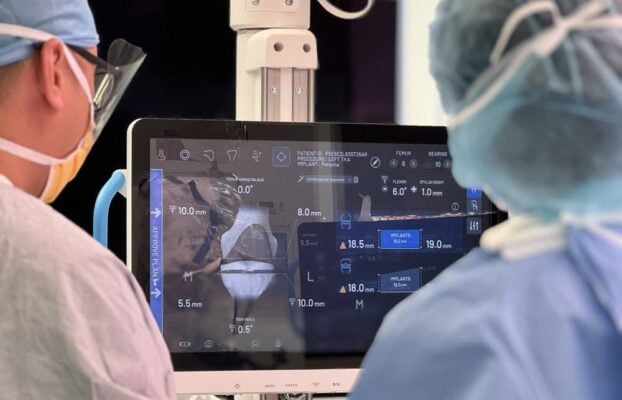
Once evaluation is completed, we will advise you on further treatment. Treatment options can range from oral anti-inflammatory medications and muscle relaxants, to recommendations for physiotherapy for appropriate hip stretches and strengthening exercises, to ultrasound/fluoroscopy guided injections, keyhole hip surgery to finally muscle-sparing joint replacement surgery.
At Hip & Knee Orthopaedics, we recommend treatment options based on your condition and your clinical profile. Both our doctors are double-fellowship trained with extensive experience in managing complex hip and knee problems, thus are well-positioned to evaluate and manage your hip pain.
Dr Tan is an orthopaedic doctor with subspecialty training in hip and knee surgery – making her the first female hip and knee replacement surgeon in Singapore.