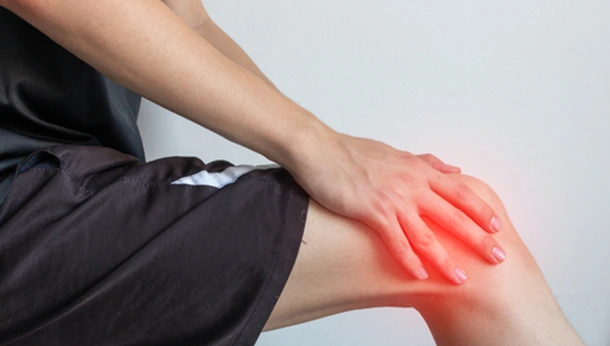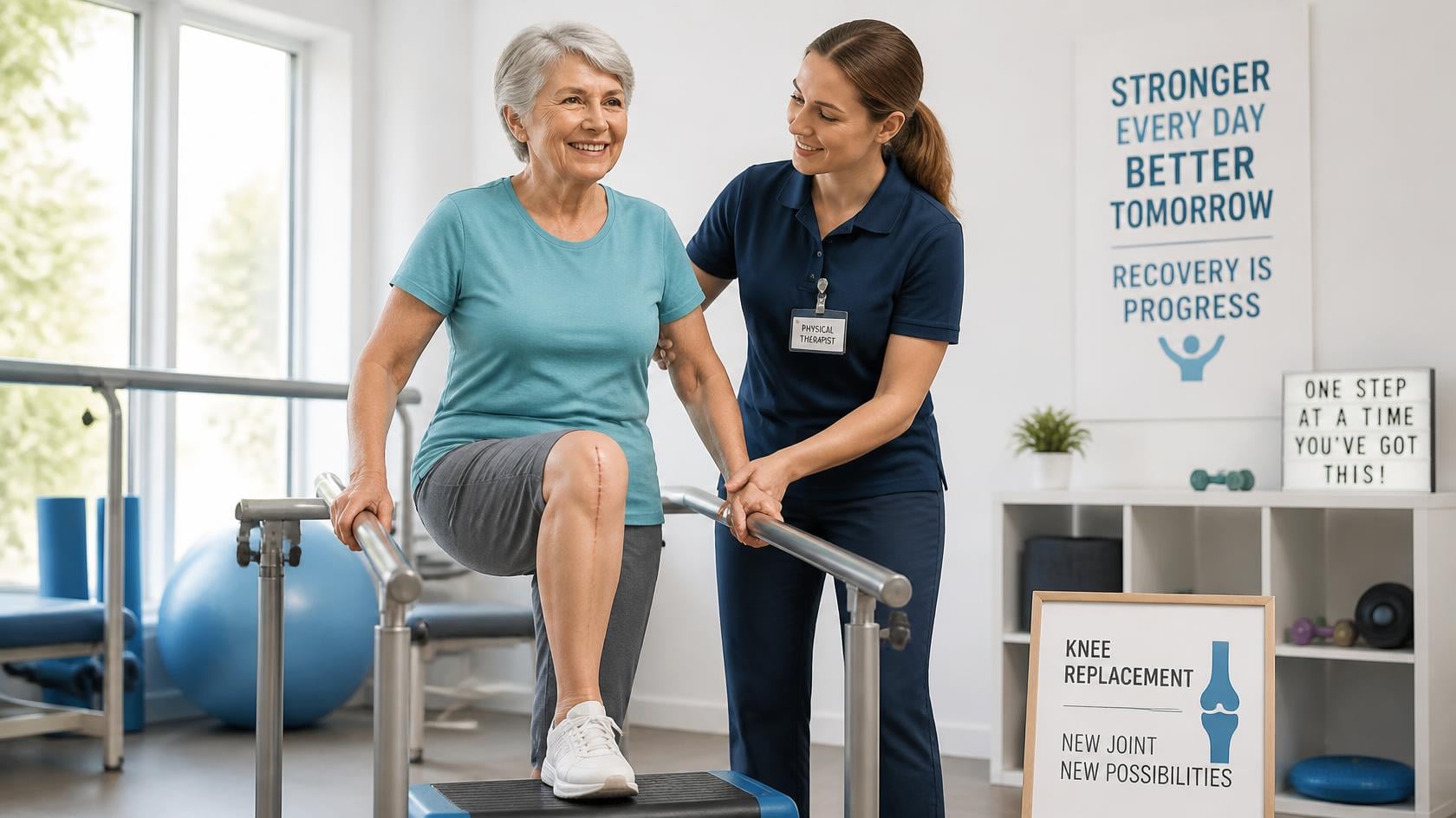

Most people with knee osteoarthritis get told one of two things—either “rest it” or “just keep moving”. Neither answer is especially useful on its own, and for a lot of patients, conflicting advice ends up being the reason they do nothing at all. That inaction tends to make things worse. The World Health Organization estimates that osteoarthritis affects over 500 million people globally, and knee OA is the most common form. Locally, it is one of the leading reasons adults over 50 visit an orthopaedic specialist in Singapore. And the pattern that brings them in is a familiar one: the joint breaks down, pain follows, people stop moving. Then, the muscles that were supposed to protect the joint get weaker, which accelerates everything. Breaking that cycle requires specific, deliberate exercise, including targeted Exercises for Knee osteoarthritis. Not general advice, but specific choices about what to do, what to avoid, and how hard to push. That is what this article covers.
What’s Happening Inside the Knee
Cartilage is the slippery tissue that lines the ends of the bones in your knee joint. Its job is to absorb shock and allow smooth movement. In osteoarthritis, the tissue gradually breaks down. The surface roughens. The cushioning thins. Bone edges begin to take forces they were never designed to absorb alone.
The result is knee pain, stiffness, and, as the body tries to stabilise the area, inflammation. Over time, bone spurs can form. The joint space narrows, and morning stiffness becomes a part of the day.
None of this is reversed by exercise. But exercise does something arguably more important: it strengthens the quadriceps, hamstrings and glutes that act as the joint’s shock-absorbing muscular system. A well-conditioned leg reduces the load the knee itself has to bear by a significant margin. That is why a consistent exercise programme is central to OA management, not a footnote to it.
Incorporating Exercises for Knee osteoarthritis into your routine can lead to significant improvements in mobility and pain relief.
Get Personalised Recommendations
Discover more simple ways to stay active while dealing with joint pain.
Exercises That Help
Swimming and Water Aerobics
Water reduces the load on the knee joint by supporting body weight while still providing enough resistance to build muscle. Swimming laps, pool walking, or a structured water aerobics class all deliver cardiovascular benefits with minimal joint stress. This is often the best starting point for patients in moderate-to-severe pain, or those who have found land exercise difficult to tolerate.
How Much: 20 to 45 minutes, three to five sessions per week. Begin conservatively and extend duration before increasing intensity.
Cycling
Stationary or outdoor, cycling is a well-studied and commonly prescribed option for knee OA. It strengthens the quadriceps and improves aerobic fitness without the impact forces of running. The critical detail is seat height—too low, and the knee moves into deeper flexion at the bottom of the stroke, which increases joint loading significantly. The seat should allow a slight bend at the knee when the pedal is fully down.
How Much: 20 to 40 minutes at low-to-moderate resistance. Three to five times per week.
Walking on Flat Ground
Walking is the most accessible exercise on this list, and the evidence for it is solid. Flat, even surfaces are best, as hills and uneven terrain increase joint stress considerably. Cushioned, supportive footwear is not optional here. It directly affects the forces transmitted up through the knee. A walking stick or trekking pole on the side of the affected knee can meaningfully reduce load during longer sessions.
How Much: Start at 10 to 15 minutes and build gradually toward 30 minutes most days. Pain during or after is feedback. Listen to it.
Straight Leg Raises
This one looks too simple to work, but it isn’t. Lie on your back with one knee bent and that foot flat on the floor. Keep the other leg straight. Tighten the thigh muscle of the straight leg and lift it to about 30-45 degrees, keeping the knee fully straight throughout. Hold briefly, then lower slowly. This reduces stress on the knee joint while still effectively working the quadriceps.
How Much: Three sets of 10 to 15 repetitions per leg. You can consider adding a light ankle weight when this starts to feel easy.
Partial Wall Sits
Stand with your back flat against a wall and slide down until your knees are at roughly 45 degrees. This shallow position activates the quads and glutes under load without driving the knee into the high-stress angles. It is a controlled, reproducible exercise that is easy to adjust based on how the joint is feeling on any given day.
How Much: Hold 15 to 30 seconds, three to five repetitions. Rest fully between holds.
Heel Slides
A simple range-of-motion exercise that most patients can do in bed or on the floor without equipment. While positioned on your back, softly draw the heel of the impacted leg toward your backside, flexing the knee to a comfortable degree, then extend it back out. This helps maintain knee mobility and can support stiffness management over time. It is also often well tolerated during symptom flares, when higher-load exercises may not be appropriate.
How Much: 10 to 15 repetitions per leg, once or twice daily, particularly useful first thing in the morning.
These exercises are general guidelines and may not suit every individual with knee osteoarthritis. A proper assessment by a specialist or physiotherapist can help tailor a programme that is safe and appropriate for your specific condition.
Exercises That Make Things Worse
Deep Squats and Full Lunges
At deeper knee flexion, compressive forces across the patellofemoral joint increase. A healthy knee can generally take this well, but in osteoarthritis the reduced cartilage tolerance can make these positions more symptomatic. Deep squats, full Bulgarian split squats and sissy squats can therefore place high demand on the joint, especially when performed with load or poor control. These movements are best avoided or only introduced in a modified form under professional guidance rather than performed independently.
Running on Concrete or Asphalt
Running on hard surfaces generates impact forces of around two to three times body weight with every footfall. Over thousands of steps, that is significant repetitive stress through a joint that is already compromised. Some patients with mild OA tolerate running on cushioned treadmills or grass, but it requires careful management and often physiotherapy input. Running on pavement without that context can cause inflammation and swell the joint.
High-Impact Sports
Basketball, football, aerobics classes with plyometrics, jump rope—these activities combine high landing forces with rapid directional changes. Landing from a jump can transmit significant forces through the lower limbs in a fraction of a second. A knee with cartilage loss is not equipped to absorb that load repeatedly. Beyond the cumulative damage, there is also an elevated risk of acute injury to the ligaments and menisci that are already under stress in an OA joint.
Heavy Leg Press Through Full Range
The leg press machine is not inherently off-limits for knee OA, but how most people use it is. Lowering the platform until the knees are deeply flexed and then pressing heavy weights is one of the more damaging exercises for arthritic cartilage. The joint is under high compressive load in a vulnerable position. A partial-range leg press with light weight, guided by a physiotherapist who understands OA mechanics, is a different thing entirely. It requires specific instruction, so a general gym session is not recommended.
A Few Things Worth Knowing Before You Start
Warm up before every session. 5 to 10 minutes of gentle movement, such as slow walking, ankle circles and seated knee bends, helps improve joint lubrication and reduces stiffness. Cold, stiff joints are often less comfortable and may be more sensitive to load at the start of exercise.
Distinguish between muscle discomfort and joint pain. Fatigue and mild aching in the muscles around the knee during exercise can be normal and even expected. Sharp pain, a catching sensation, or pain that sits inside the joint rather than around it is a signal to stop.
Use the two-hour rule. If pain or swelling lingers for more than two hours after finishing exercise, the session was too intense. Scale back the duration or resistance next time, not the frequency.
Shoes are not a minor detail. Cushioned, supportive footwear reduces impact transmission through the joint on every step. Flat, hard-soled shoes, dress shoes, thin sandals, and old trainers with collapsed midsoles provide none of that protection and should not be worn during exercise.
Rest days matter. The body adapts during recovery, not during the session itself. Pushing through significant pain daily without adequate rest prolongs inflammation rather than reducing it.
When It’s Time to See a Specialist
Exercise is effective, but it is one part of managing a progressive joint condition. If you have been careful with your programme for several months and the pain is not improving, or if it is getting worse, a clinical assessment is overdue.
There are also symptoms that should prompt an earlier appointment. Swelling that does not settle between sessions. A sensation of the knee giving way or locking mid-movement. Pain that disturbs sleep. Significant reduction in how far the joint will bend or straighten. These are not signs to manage with more exercises, but signs the joint needs to be examined.
At Hip & Knee Orthopaedics in Singapore, the approach is built around what is actually happening in your joint and what your life looks like outside the clinic. After a thorough assessment, our specialist team puts together a plan that reflects your specific grade of OA, your pain levels, your activity goals and your overall health. That plan may involve physiotherapy, bracing, injections, weight management strategies, or, in more advanced cases, surgical options. The aim in every case is to reduce pain and keep you moving for longer.
Earlier intervention consistently leads to better outcomes. If your knees are limiting what you can do, getting a proper assessment now is worth it.
This article was reviewed by Dr Adrian Lau, Specialist Orthopaedic Surgeon at Hip & Knee Orthopaedics.