Published · Last updated
Key Takeaways
- Osteoarthritis affects more than 10% of the population, and pain often peaks in the weeks before surgery as the joint’s remaining cartilage keeps wearing down (SingHealth).
- Losing 1kg of body weight removes roughly 4kg of load from the knee with every step — a finding from a clinical trial of 142 patients (Messier et al., Arthritis & Rheumatism, 2005).
- Staying active the right way (not stopping, not overdoing it) matters more than any single medication or device.
- Some warning signs — fever, sudden locking, numbness — mean you should call your surgical team immediately, not wait for your surgery date.
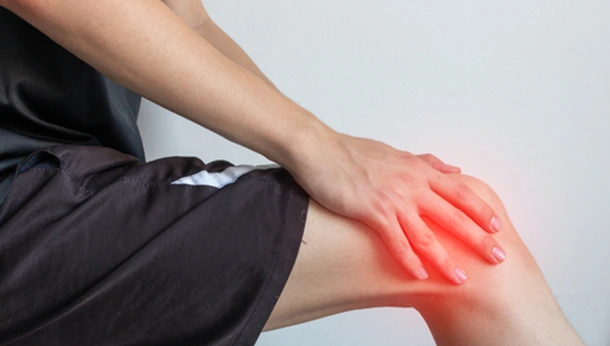
Waiting for knee surgery feels like limbo. You’ve been told it’ll help. You’ve marked the date on the calendar. But until then, you’re still in pain, and that pain doesn’t stay in your knee. It affects how you walk, how you sleep, and what you can manage in a normal day.
This isn’t a general guide to non-surgical knee treatment. If you’re still exploring whether you need surgery at all, our guides on non-surgical knee pain management and knee pain treatment without surgery cover that ground. This one is for a narrower situation: you already have a surgery date, and you need to get through the weeks before it as comfortably and safely as possible.
Why Your Knee Feels Worse Right Before Surgery
Think of the knee joint as a machine with worn-out parts. The cartilage that once let the bones glide without friction has thinned, or in some spots, worn through completely. Once that happens, the joint doesn’t heal itself back to normal; it tends to keep declining until surgery replaces the damaged surfaces.
That’s why the timing can feel cruel: the closer you get to your surgery date, the more the joint has usually deteriorated. Bones grinding, popping sounds, sharp jolts on stairs, stiffness after sitting too long — none of that is unusual. Osteoarthritis is the most common form of arthritis, affecting more than 10% of the population, with rates increasing sharply after age 50 (SingHealth).
Think of This Period as “Prehab,” Not Just Pain Control
Everything below (movement, weight management, strengthening) does double duty. It eases pain now, and it may also put your body in better shape to recover once you’re through surgery. It’s worth being honest about the evidence here rather than overselling it.
A 262-patient randomized trial found that a structured, multidisciplinary prehabilitation program did not significantly improve short-term functional independence after total knee replacement — 34% of the prehab group reached functional independence a few days post-op versus 27% of the control group, a gap too small to call meaningful (Soni et al., JAMA Network Open, 2022). But a broader review pooling multiple smaller trials found prehab was linked to improvements in post-surgical pain, strength, and range of motion, while flagging that most of those trials carried a high risk of bias (systematic review and meta-analysis, 2024).
The honest takeaway: formal prehab programs aren’t a guaranteed shortcut to a faster recovery, but there’s no evidence that staying as mobile and strong as your pain allows before surgery does any harm, and it may help. Ask your surgical team whether a short course of pre-op physiotherapy makes sense for your case.
Try Medication, But Don’t Rely on It Alone
Paracetamol can take the edge off basic aches. NSAIDs like ibuprofen or naproxen bring down inflammation. Neither is a long-term solution, and both carry real risk if overused, including kidney strain, stomach ulcers, or added cardiovascular strain, particularly for patients over 60.
Take them under medical supervision, and never combine medications, including over-the-counter ones, without checking with your doctor first.
Movement Helps, But It Has to Be the Right Kind
You’ve probably heard conflicting advice: rest it, move it, don’t sit too long, don’t walk too much. The real answer sits in between. Total stillness causes stiffness; high-impact activity causes further damage. The goal is to keep the joint moving without loading it hard.
A few options that tend to be well tolerated:
|
Activity |
Why it works |
|---|---|
|
Heel slides while seated |
Moves the joint through its range without weight-bearing |
|
Walking in waist-high pool water |
Water supports body weight, cutting joint load substantially |
|
Slow, stationary cycling |
Low-impact, controllable resistance |
|
Short supported walks |
Keeps circulation and mobility up without overloading the joint |
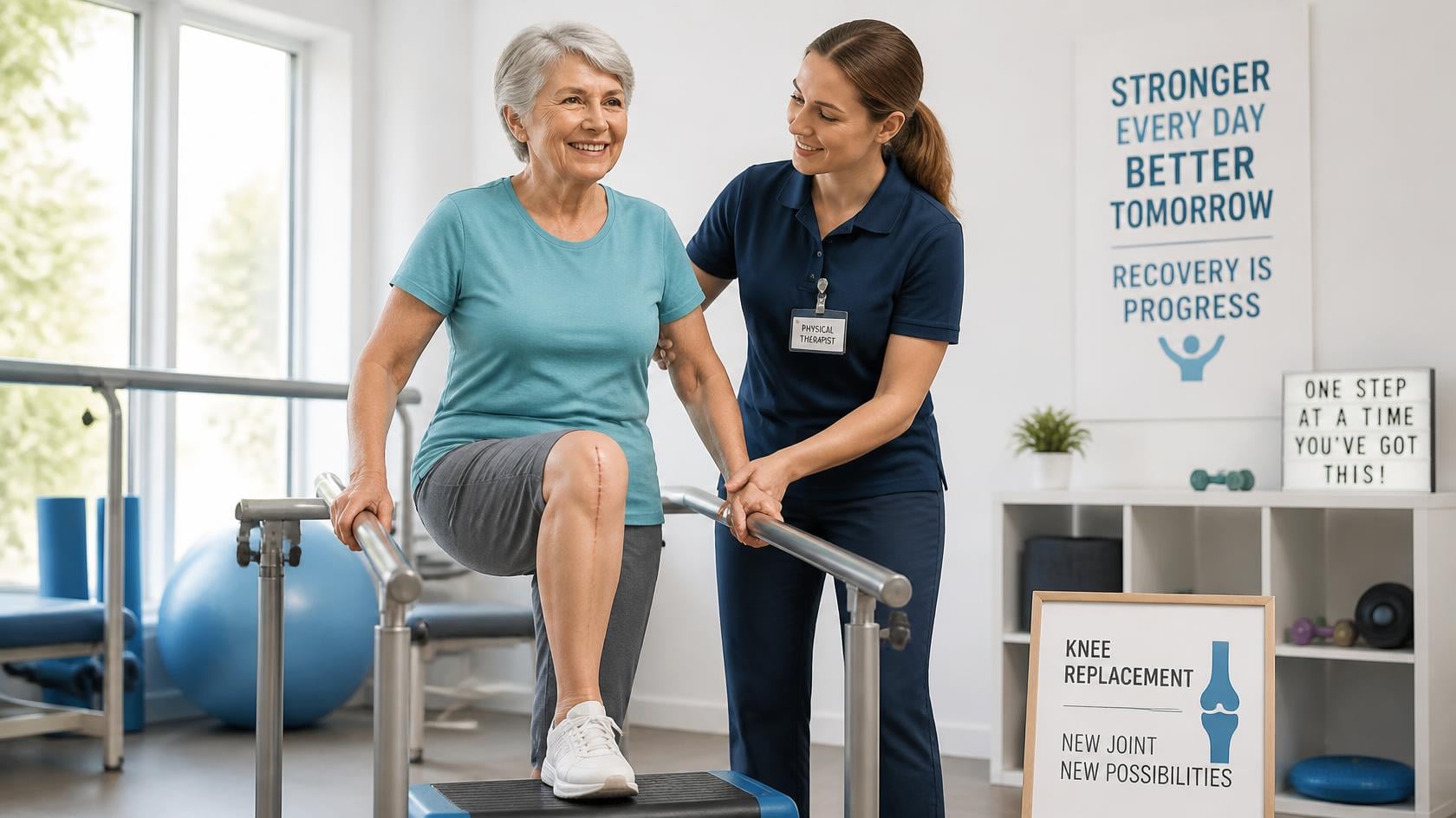
Structured physiotherapy can help too. A randomized controlled trial of 162 patients with chronic knee pain found that a 12-week supervised digital care program reduced pain meaningfully compared with a control group (Mecklenburg et al., Journal of Medical Internet Research, 2018). Ask your care team for a referral; even one supervised session a week can make a difference.
Every Kilo Counts
It’s worth repeating because it’s easy to underestimate: extra body weight translates into outsized extra strain on the knee. In a clinical trial following 142 overweight and obese adults with knee osteoarthritis, each 1kg of weight lost was associated with roughly 4kg less load on the knee per step (Messier et al., Arthritis & Rheumatism, 2005). Lose 5kg, and that’s a meaningful drop in the pounding your joint absorbs with every stride.
This isn’t a case for crash dieting. Smaller, sustainable changes, cutting back processed food, drinking more water, moderating portions, plus whatever movement your knee allows, add up. The goal isn’t perfection. It’s relief, and a bit of a head start before surgery.
Use Braces, Canes, or Walkers Without Guilt
Patients often feel self-conscious about using a brace or a stick. They shouldn’t. These are tools, not admissions of weakness.
A knee brace can stabilise the joint and cut down sideways motion. A cane, used on the opposite hand from the affected knee, reduces load when walking. A walker, while bulkier, can prevent a fall. Used well, these devices let you move more, and moving more safely is part of what prepares your body for the recovery ahead.
Ice Can Work Wonders
Ice isn’t just a painkiller substitute. Applied for up to 15 minutes after activity, wrapped in a cloth (never directly on skin), it reduces swelling effectively. A towel and a bag of frozen peas do the job as well as anything from a pharmacy.
Injections: Sometimes Helpful, Not a Cure
If pain is severe and medication isn’t enough, your doctor may suggest an injection. Two are common:
- Corticosteroids, which reduce inflammation quickly but temporarily
- Hyaluronic acid, which acts as a joint lubricant
Response varies widely. Some patients get weeks of relief; others notice little difference. Neither is a cure, and neither is guaranteed to work for a given patient, but if you’re trying to get comfortably through the weeks before surgery, they’re worth discussing with your surgical team.
What Not to Do
Keep this list simple. Avoid:
- High-impact exercise (jogging, tennis, jumping)
- Deep lunges or squats
- Twisting the knee while weight-bearing
- Sitting for hours without standing to move
- Unvetted home remedies your doctor hasn’t cleared
If something makes the pain spike, stop. Pushing through it isn’t helping your body get ready for surgery.
Mental Health: Don’t Brush It Off
Constant pain wears people down, and not only physically. Sleep suffers. Mood drops. People stop doing things they enjoy and start withdrawing from friends and routines they’d normally look forward to.
Feeling low about ongoing pain isn’t a weakness, it’s a common response to a genuinely hard stretch. Talk to someone. A counsellor can help. Even a few minutes of deep breathing each morning can help you feel more grounded while you wait.
Call the Doctor If…
Not all knee pain is equal, and some signs should never wait for your next scheduled appointment. Contact your orthopaedic team if you notice:
- The knee becomes hot or red
- You develop a fever
- Pain suddenly worsens overnight
- You feel numbness in the leg or foot
- The knee locks and won’t bend
These can signal infection, acute inflammation, or nerve involvement. Err on the side of calling.
What Happens on the Other Side
Everything above is about getting through the wait well, not just enduring it. Once your surgery date arrives, the goal shifts from managing a failing joint to rebuilding a new one. If you haven’t yet gone through the full evaluation and want to understand what the procedure itself involves, our knee replacement surgery page covers what to expect from consultation through recovery.
Frequently Asked Questions
Can I still exercise if I’m waiting for knee replacement surgery?
Yes, with the right kind of movement. Low-impact activity like pool walking, stationary cycling, and seated heel slides keeps the joint mobile without adding damaging load. Avoid high-impact or twisting movements, and stop anything that spikes your pain.
Will losing weight before surgery actually make a difference?
It can meaningfully reduce the load on your knee in the meantime, based on trial data showing roughly a 4:1 ratio between weight lost and joint load reduced (Messier et al., 2005). Whether it changes your surgical outcome specifically is a question for your surgeon, since that depends on your individual case.
Are steroid or hyaluronic acid injections worth trying before surgery? They can provide weeks of relief for some patients, though results vary and neither is guaranteed to work. They’re a reasonable option to discuss with your surgical team if medication and activity changes aren’t enough.
How do I know if my knee pain is an emergency and not just part of the wait?
Fever, redness or heat around the joint, sudden overnight worsening, numbness, or a knee that locks and won’t bend are signs to call your orthopaedic team right away rather than waiting for a scheduled visit.
Final Thoughts
Surgery is coming, and that’s good news. But today still matters. Small, steady steps, pain relief, safe movement, weight management, emotional support, can make the weeks before your operation more bearable and may put you in better shape for what comes after.
At Hip & Knee Orthopaedics in Singapore, we support patients from first consultation through post-op rehab. If you’re struggling in the meantime, reach out rather than waiting for surgery day to get support. There’s a lot you can do, and you don’t have to manage it alone.