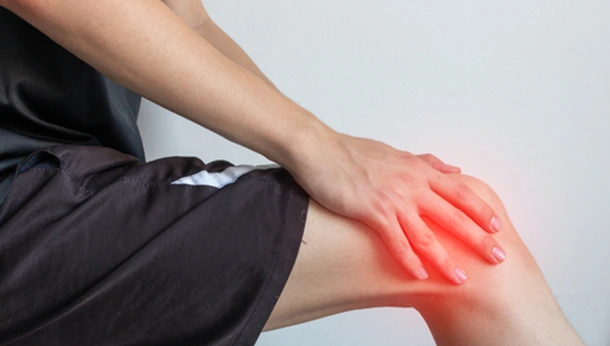
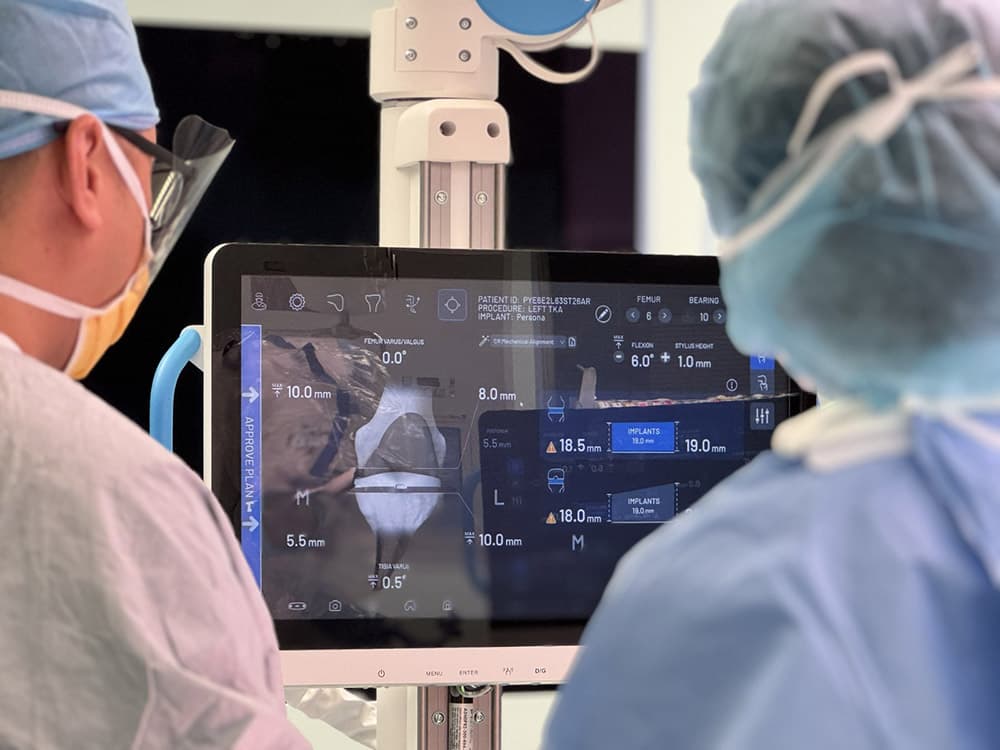
Hip replacement surgery is often described as life-changing. People go in with stiff, painful joints and come out with a chance at easier movement. But sometimes, instead of feeling total relief, they notice something unexpected: the knee on the same leg begins to hurt.
It catches patients off guard. That reaction is common. And while it feels worrying, most of the time it has simple explanations.
Why the Knee Gets Pulled In
The hip and knee don’t operate separately. They’re part of one long lever—your leg. If the top of the lever changes, the bottom responds. Before surgery, many people walk differently to protect the painful hip. They lean to one side, shorten their stride, or swing the leg outwards. The knee adapts to those habits.
After the operation, the hip is set straight again. That’s good, but the knee is suddenly dealing with a new pattern of movement. Think about adjusting the steering on a car—you fix the alignment, and the wheels track differently. The knee is essentially that wheel.
Common Reasons for Knee Pain
A New Way of Walking
The limp you had before surgery may be gone, but the “new” gait feels different. That puts stress on muscles and ligaments around the knee. Some people describe it as a dull ache, others as sharp twinges when they step a certain way.
Muscle Weakness
Arthritis in the hip usually causes people to use their muscles less. Over months or years, the thighs, buttocks, and even calves weaken. After surgery, those muscles need to fire again, but they’re not always ready. Until they catch up, the knee ends up doing more than its share.
Referred Pain
Pain doesn’t always show up where the problem begins. Nerves in the hip can make you “feel” pain in the knee. Patients sometimes believe the knee is the problem, only to find the discomfort eases as the hip heals.
Simple Strain
Climbing stairs too soon, walking further than expected, or even standing for long stretches, all can leave the knee sore while the hip is still tender.
Hidden Knee Arthritis
In some patients, arthritis was already present in the knee. It just wasn’t noticed because the hip pain was louder. Once the hip feels better, the quieter knee pain starts to make itself heard.
What Studies Point Out
It’s not just a handful of patients who feel this. Research confirms it.
Notably, an article published in the National Library of Medicine postulates that weak hip and thigh muscles are often behind the problem, shifting work onto the knee until strength returns.
Findings like this match what we sometimes see in the clinic. It’s not unusual, and for most people, it gets better with time.
What’s Normal and What Isn’t
Some soreness is expected. If the pain improves with rest, ice, or stretching, it usually means the knee is adapting.
But there are red flags. These should prompt a call to your surgeon:
- Pain that gets steadily worse instead of better
- Swelling, heat, or redness around the knee
- Trouble putting weight on the leg
- Sudden sharp pain that doesn’t ease
- Pain appears months later without warning
These don’t automatically mean something serious, but they deserve a closer look.
How to Calm Knee Pain After Hip Surgery
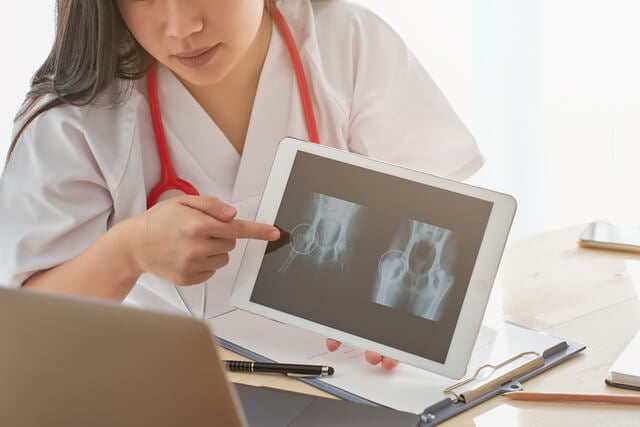
Rest in Small Doses
Pausing activity helps calm irritation, but too much rest slows recovery. Gentle daily movement is the better path.
Ice Packs
Cold therapy for 15–20 minutes can take the edge off inflammation. Patients often find it makes walking easier afterwards.
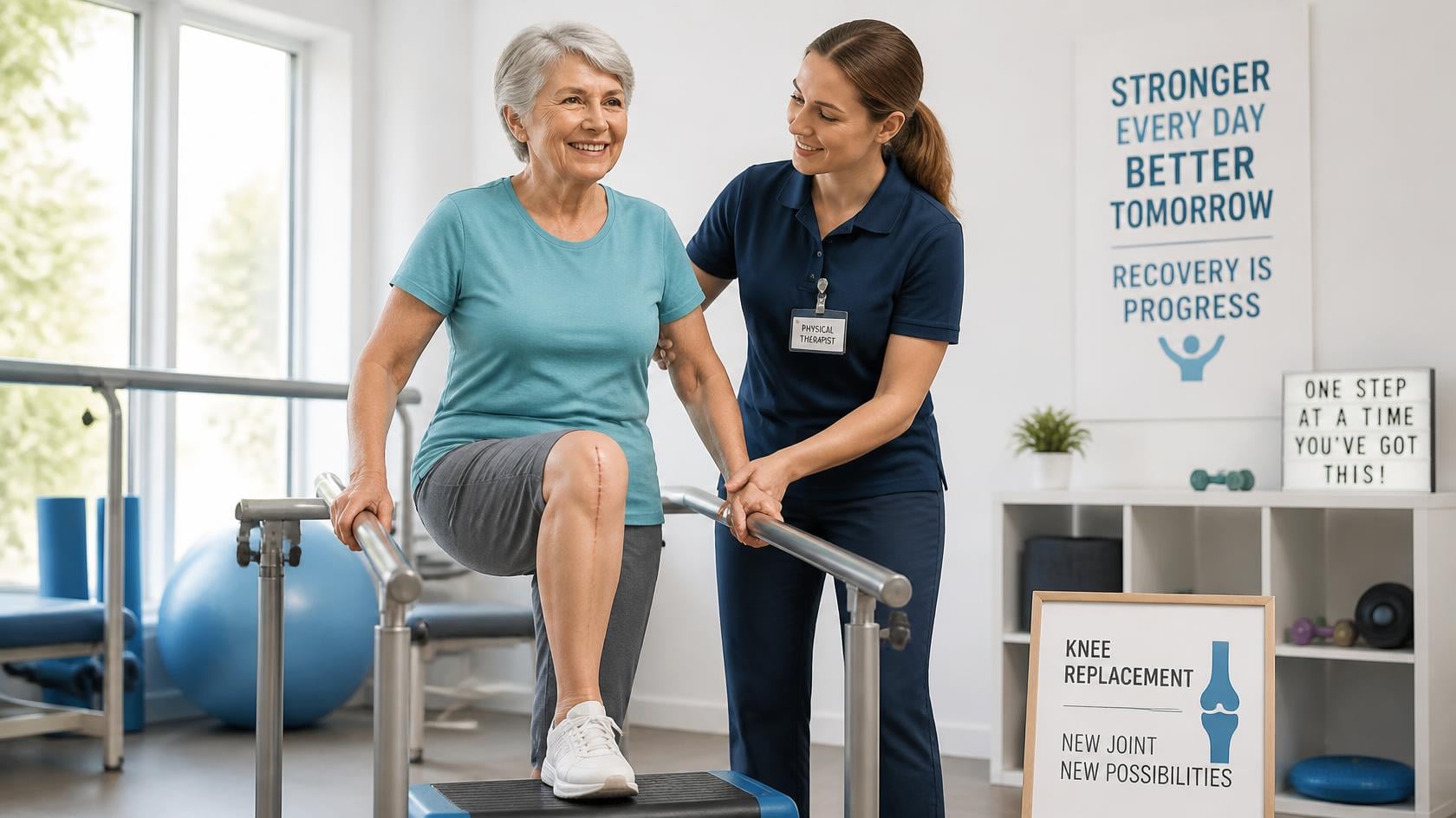
Therapy Exercises
Strength-building moves such as bridges, leg raises, and side-lying lifts help balance the load between the hip and knee. They don’t need to be complex; consistency is what matters.
Use Your Walking Aid
People sometimes want to ditch the cane early. But a few more weeks of using it can prevent limping and keep the knee from taking extra strain.
Stretch Tight Muscles
Simple hamstring and quad stretches, guided by a physiotherapist, loosen up tension that often makes knee pain worse.
What Recovery Usually Looks Like
For most people, knee pain fades as muscles grow stronger and the hip heals. Around the three- to six-month mark, things often settle noticeably. Some describe it as a gradual easing—“one day I realised I wasn’t thinking about the knee anymore.”
But timelines vary. A healthy 55-year-old who was active before surgery may recover faster than someone in their seventies with arthritis in both knees. Some patients feel frustrated that progress is slower, but this doesn’t mean the hip replacement failed. It means your body is taking the time it needs.
Reassurance Goes a Long Way
It’s natural to worry when pain shows up in an unexpected place after surgery. But the body has been through a major change. Muscles, nerves, and joints are learning a new rhythm. Knee pain is often just part of that story.
The important thing is to keep an eye on it, stay active in the right way, and talk to your care team if something feels unusual. Most patients find that patience, therapy, and small adjustments get them through this stage.
Final Word
Hip replacement surgery aims to give people back their movement and freedom from pain. Knee discomfort along the way doesn’t mean the surgery failed—it usually means the body is adjusting.
At Hip & Knee Orthopaedics, we support patients through every stage of recovery. From the first steps after surgery to regaining full mobility, our orthopaedic surgeons and specialists are here to guide you. If knee pain is holding you back, reach out. Relief is possible, and your recovery can still move forward with confidence.