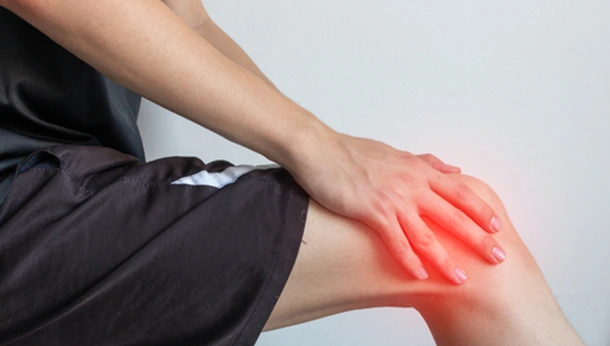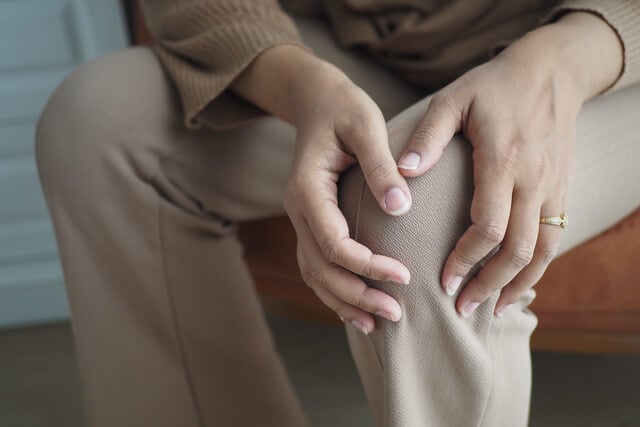

If you’ve ever felt your knee act up the moment the air turns cool or the rain starts, you’re not imagining it. People have been saying this for centuries. Some jokingly call their knees their “weather forecast”. Others just know the monsoon season means more stiffness and pain.
Is there hard science that explains it all? Not completely. But there are good reasons your knee might feel worse when it’s cold. And knowing them makes it easier to cope.
What the Cold Does
Here’s what’s happening under the surface.
First, the joint fluid in your knee changes. It’s normally slippery, helping everything move without grinding. When it’s cold, that fluid thickens. You can picture honey or cooking oil—fine when it’s warm, sluggish when it’s not. That alone can make the joint feel stiff until you get moving.
Then there’s pressure. What may be happening is that weather systems change barometric pressure, especially before a storm. Lower pressure can cause tissues in your knee to expand slightly. On a healthy joint, that’s no problem. But in a joint with old injuries, scar tissue, or arthritis, this expansion can press on sensitive areas and cause discomfort.
Circulation is another piece. Cold makes blood vessels shrink. Less blood flow to your legs means colder muscles and slower healing. Add to that the natural muscle tightening that happens in the cold, and you’ve got more pulling on the joint.
And let’s be honest. Cold, damp days don’t exactly encourage exercise. The more you sit, the less you move. Stiffness creeps in because of inactivity as much as the weather itself.
Why Old Injuries Complain Louder
A healthy knee usually takes these changes in stride. But if you’ve had a torn ligament, surgery, or arthritis, you don’t have the same buffer.
- Scar tissue doesn’t flex well.
- Cartilage loss means more friction.
- Low-grade inflammation sticks around and flares easily.
- Nerves in damaged tissue are more reactive, so small changes feel bigger.
That’s why one person might shrug off a cold snap, while another feels like their knee has doubled in age overnight.
Do Studies Prove It?
Research has examined the impact of weather on joint pain, but results are mixed. Some individuals notice that changes in temperature or barometric pressure affect their knees, while others do not. The key point, however, is that personal experience is valid, even if science has not fully explained the phenomenon.
What Helps in Everyday Life
You can’t control the forecast, but you can stack the odds in your favour.
Stay warm. It sounds simple, but it works. A knee sleeve, soft brace, or even just long pants help keep heat in.
Heat therapy is another go-to. A hot shower in the morning, a warm pack before activity, or even a damp towel heated in the microwave can loosen things up fast.
Movement matters more than most people realise. Even ten minutes of walking around the house helps keep fluid circulating in the joint. Stationary cycling is excellent. Gentle stretches for quads and hamstrings keep the surrounding muscles supportive.
And don’t forget water. Cooler weather tricks people into drinking less. But dehydrated joint fluid is less effective, and that can make stiffness worse.
One more tip: give yourself more time to warm up before exercise. Cold muscles are tight muscles, and jumping into activity too quickly is asking for trouble.
Pay Attention to Patterns
Here’s something most people don’t think to do: notice when your knee pain flares. Morning? Damp days? Just before a storm?
That knowledge lets you plan. If you know rainy days make it worse, stretch a bit longer, wear a sleeve, or ease up on activity. It’s about being prepared, not surprised.
When It’s Time to Get Help
Cold-related discomfort usually isn’t serious. But it shouldn’t be ignored if it crosses certain lines. If pain sticks around for weeks, if your knee swells and stays warm, if it locks, catches, or feels unstable, that’s when to call a specialist.
At Hip & Knee Orthopaedics, doctors can figure out whether what you’re feeling is just weather-sensitivity or something more. Sometimes the right therapy or treatment makes all the difference.
Wrapping It Up

Cold weather doesn’t cause injuries, but it does make many of them feel worse. Thicker joint fluid, pressure changes, slower circulation, tighter muscles—all of it adds up. And if you’ve got an injured or arthritic knee, you’ll notice it more than most.
The good news? You’re not powerless. Keep warm, move regularly, use heat when needed, and pay attention to your body’s patterns. And if your knee pain isn’t easing or it’s interfering with your life, that’s the moment to get checked.
At Hip & Knee Orthopaedics, the goal is simple: help you stay mobile and comfortable, whatever the forecast. Reach out to us to get a personalised plan for protecting and supporting your knees.