Hip pain has a way of sneaking into daily life. It starts as a dull ache after a long walk. Maybe you feel a pinch when you bend down to tie your shoes. Or you wake up at night because rolling over hurts. The tricky part is that hip pain doesn’t always show up where you expect.
At Hip & Knee Orthopaedics, we often hear patients say things like, “It’s not exactly my hip… it’s more in my groin,” or “I think it’s my back, but my GP thinks it’s my hip.” And they’re both right; hip pain can spread, overlap, or even fool you into thinking it’s coming from somewhere else.
That’s where a “hip pain map” comes in handy. By matching the area of pain with common causes, you get a clearer picture of what might be going on. It’s not a diagnosis, but it’s a starting point.
Why the Spot Matters
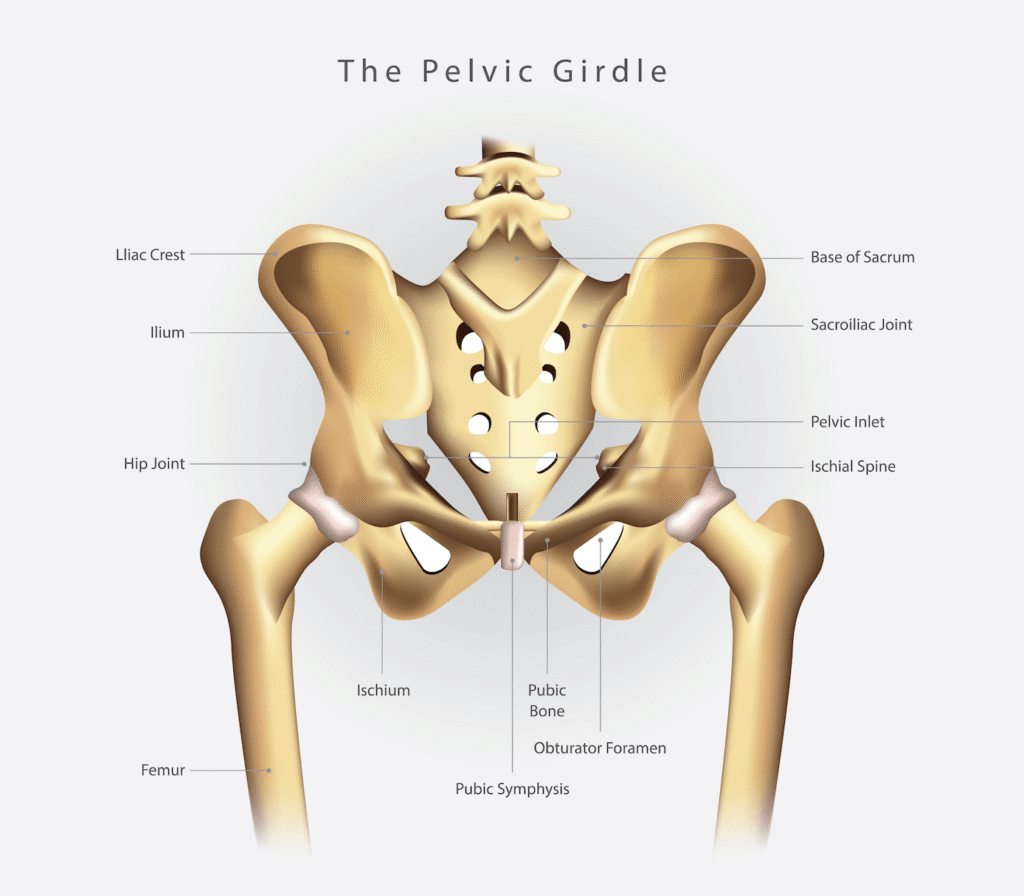
The hip is a ball-and-socket joint with layers of muscles, tendons, nerves, and ligaments holding it all together. Because it works with the pelvis and the spine, pain can easily spill into nearby areas.
Research suggests that up to 15% of adults over 60 live with regular hip pain. But the source of that pain varies. A deep groin ache isn’t the same as a burning pain on the outer hip. Knowing where the pain hits often helps doctors work out why it’s happening.
Still, it’s only part of the story. Two people with side hip pain might have totally different conditions; one with bursitis, the other with a torn tendon. That’s why mapping helps guide the conversation, but a proper exam seals the deal.
Front Hip Pain
Front hip pain usually shows up as an ache in the crease where the thigh meets the body. Patients often describe it as “a deep pinch” or “something stuck inside”. It’s the kind of pain that worsens when you sit too long or climb stairs.
Likely Suspects:
- Arthritis: Wear and tear inside the joint.
- Labral Tear: Damage to the cartilage ring that cushions the hip.
- Hip Impingement (FAI): Bone rubbing where it shouldn’t.
- Hip Flexor Strain: Often seen in runners, cyclists, or anyone pushing hip muscles too hard.
If it feels like the joint catches every time you bend, that’s a classic sign of joint-based hip pain.
Side Hip Pain
Side pain is a different story. If lying on your hip makes you wince, chances are the problem isn’t inside the joint—it’s the soft tissue around it.
Possible Causes:
- Trochanteric Bursitis: Inflammation of the bursa, a small fluid sac.
- Gluteus Medius Tendon Injury: Think of it like the hip’s version of a shoulder rotator cuff tear.
- IT Band Syndrome: A tight band of tissue pulling on the side of the leg.
Patients often notice side pain when climbing stairs, standing on one leg, or even just walking briskly. Some describe it as a stabbing pain, others as a constant burn.
Back Hip Pain
Pain felt at the back of the hip or buttock often doesn’t come from the hip joint itself. More often, it’s the spine, sacroiliac joint, or nearby muscles.
Common Culprits:
- Sciatica: Nerve pain radiating from the spine down the leg.
- Sacroiliac Joint Irritation: Where the spine meets the pelvis.
- Piriformis Syndrome: A tight buttock muscle pressing on the sciatic nerve.
We’ve had patients come in swearing it’s “hip arthritis”, but scans show the hip joint is fine. This is because it’s actually a lower back issue. That overlap is what makes diagnosis so important.
Groin Pain
Groin pain is the classic “red flag” that the hip joint itself is involved. Patients often describe it as deep, almost inside the body, rather than on the surface.
Usual Suspects:
- Early Arthritis: The first sign is often groin pain.
- Labral Tears: Can cause painful catching or clicking.
- Sports Hernia: Common in younger athletes.
If every time you squat or twist, you feel a pinch deep inside, this is the kind of description that makes doctors immediately think of the hip joint.
When to Get Checked

Not every ache needs urgent attention. But there are times when waiting it out isn’t wise:
- Pain lasting more than a couple of weeks.
- Pain wakes you up at night.
- Trouble walking, standing, or putting on shoes.
- Clicking, catching, or locking in the joint.
- Swelling, redness, or fever (possible infection).
Pain should not mess with your sleep or daily life.
Treatment Options
There isn’t a one-size-fits-all fix for hip pain. Treatment depends on the cause and severity. Most doctors start small before discussing surgery.
Non-Surgical Options:
- Physiotherapy: Strengthening and stretching to balance the joint.
- Medication: Anti-inflammatories or simple pain relief.
- Injections: Cortisone or PRP to calm inflammation.
- Lifestyle Changes: Weight control, switching to low-impact activities like swimming or cycling.
Surgical Options:
- Arthroscopy: Keyhole surgery to repair tears or reshape bone.
- Tendon Repair: Fixing torn gluteal tendons.
- Hip Replacement: For advanced arthritis where pain won’t let up.
Hip replacements consistently rank among the top procedures for improving older adults’ quality of life. Many patients say they wish they’d done it sooner.
Living With Hip Pain
Here’s the good news: hip pain doesn’t always mean surgery. Many people get relief with rehab, injections, or simple adjustments to daily routines. The key is catching it early, before compensation creates new problems.
Keep track of your symptoms. Does it hurt more with stairs? Do you feel it lying on one side? Those small details make a big difference during diagnosis.
FAQs
1. Why does the front of my hip hurt?
It often means joint involvement; arthritis, a tear, or impingement.
2. Can back problems cause hip pain?
Yes. Sciatica and spine issues frequently cause pain in the hip or buttocks.
3. Does hip pain always mean arthritis?
No. Many cases come from tendons, bursae, or muscles instead.
4. Should I keep exercising if my hip hurts?
Light movement is usually fine, but avoid pushing through pain until a doctor checks it.
5. When is hip replacement necessary?
When pain is constant, mobility is limited, and non-surgical care no longer works.
Wrapping Up
Hip pain can be confusing. It shows up in different places, it mimics other conditions, and it doesn’t always tell you the full story. But mapping where it hurts gives valuable hints.
At Hip & Knee Orthopaedics, we use those clues, along with scans and exams, to uncover the real cause. Because the goal isn’t just to mask pain, it’s to help patients move freely again.
If hip pain is slowing you down, don’t brush it off. The sooner you know what’s going on, the faster you can get back to living life without that constant ache.
Don’t wait. Find out what’s really causing your hip pain and reclaim your mobility.