
Medically reviewed by Dr Tan Sok Chuen at Hip & Knee Orthopaedics
When knee arthritis progresses to the point where walking, climbing stairs or everyday activities become painful, knee replacement surgery may be considered. But not every patient needs the entire knee joint replaced.
Depending on where the arthritis is located, an orthopaedic surgeon may recommend either a partial knee replacement or a total knee replacement.
For patients considering knee replacement surgery in Singapore, the choice between the two depends less on age than many people assume. The extent of the arthritis, condition of the ligaments, knee alignment, symptoms and activity goals are often more important.
What is the Difference Between Partial and Total Knee Replacement?
A partial knee replacement, also known as unicompartmental knee replacement, resurfaces only the part of the knee affected by arthritis. Healthy bone, cartilage and ligaments in the remaining knee are preserved.
A total knee replacement resurfaces the damaged surfaces across the knee joint and is generally used when arthritis affects several compartments or there is more extensive joint damage.
The knee has three main compartments: the medial compartment or the inner side, the lateral compartment or the outer side and the patellofemoral compartment, which is the front part of the knee, also commonly known as the kneecap.
When arthritis is confined mainly to one compartment, partial knee replacement may be an option. When several areas of the knee are severely affected, total knee replacement is more appropriate.
Total vs Partial Knee Replacement at a Glance
|
Partial knee replacement |
Total knee replacement |
|
|
Area replaced |
One knee compartment |
Multiple knee compartments |
|
Natural knee preserved |
More bone and ligaments preserved |
More joint surfaces resurfaced |
|
Best suited for |
Arthritis isolated to one compartment |
Widespread or advanced knee arthritis
|
|
Initial recovery |
Often faster |
Usually more extensive |
|
Knee sensation |
May feel more natural in suitable patients |
Treats a larger area of damaged joint
|
|
Age restriction |
No fixed age cut-off |
No fixed age cut-off |
Partial knee replacement is not simply a smaller or better version of total knee replacement. The two procedures treat different patterns of knee arthritis.
Who is Suitable for Partial Knee Replacement?
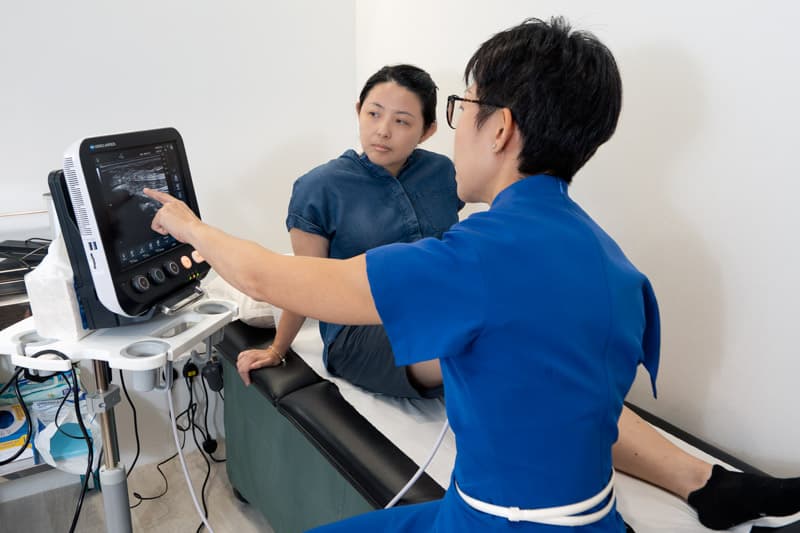
Partial knee replacement may be considered when pain and cartilage loss are concentrated in one compartment while the remainder of the knee remains relatively healthy.
For example, a patient may have severe arthritis on the inner side of the knee but preserved cartilage on the outer side and behind the kneecap.
The knee should generally have satisfactory movement and stable ligaments. Significant stiffness, ligament damage or arthritis affecting several parts of the joint will make partial knee replacement an unsuitable surgery to consider.
Because healthy structures are retained, patients may experience a quicker initial recovery, less postoperative pain and a knee that feels more natural. However, arthritis may subsequently develop in the parts of the knee that were not replaced.
Who is Better Suited for Total Knee Replacement
Total knee replacement is generally considered when arthritis has become more widespread.
Patients may experience pain across the knee rather than in one specific area. There may also be substantial stiffness, swelling, reduced mobility or increasing bow-legged or knock-kneed alignment.
Surgery is usually considered after appropriate non-operative treatments such as medication, physiotherapy or injections no longer provide sufficient relief.
Total knee replacement may be appropriate for patients whose knee pain significantly affects everyday activities, including walking, stairs or getting out of a chair, as well as those experiencing persistent pain at rest or at night.
Does Age Determine Which Knee Replacement You Should Have?
Not by itself.
A common misconception is that partial knee replacement is mainly for younger patients while total knee replacement is for older patients.
In reality, the condition of the knee matters more than the patient’s chronological age.
AAOS guidance notes that there are no absolute age restrictions for total knee replacement, while modern partial knee replacements can achieve good results in appropriately selected younger and older patients.
Age still matters because it influences activity expectations, general health, implant longevity and the likelihood of needing another operation later in life. But it should be considered alongside the pattern of arthritis.
Knee Replacement in Patients Under 50
Knee replacement is generally approached more cautiously in younger adults because they may live with the implant for several decades.
A younger patient with arthritis confined to one compartment may potentially be considered for partial knee replacement, particularly when preserving healthy bone and ligaments is desirable.
However, age alone does not make partial replacement the right option. If arthritis affects the entire knee, performing a partial replacement simply because the patient is young could leave significant disease untreated.
For younger patients, joint-preserving treatments may also be considered before knee replacement where appropriate.
Knee Replacement Between 50 and 65
Patients in their 50s and early 60s often have particularly different expectations of knee surgery. Many remain active professionally and may wish to continue travelling, golfing, cycling, exercising or caring for their families.
Partial knee replacement can be an attractive option where arthritis is truly localised because more natural knee kinematics are retained.
If the arthritis is widespread, however, total knee replacement may provide a more appropriate treatment despite the patient’s relatively young age.
The objective should be to choose the operation that treats the existing disease rather than selecting the smallest procedure possible.
Knee Replacement Between 65 and 75

This is a common age range for patients considering knee replacement because osteoarthritis may have progressed sufficiently to affect mobility and quality of life.
Both partial and total knee replacement remain possibilities.
A healthy 70-year-old with isolated medial compartment arthritis, good ligaments and preserved cartilage elsewhere may be a good candidate for partial replacement.
Another patient of exactly the same age with severe arthritis throughout the knee may be far better suited to total knee replacement.
The X-rays, symptoms and physical examination matter more than the age printed on the patient’s identity card.
Knee Replacement Over 75
Older age does not automatically make knee replacement unsuitable.
For patients in their late 70s or 80s, the decision increasingly hinges upon general health, mobility, independence and the patient’s goals.
A patient whose knee pain prevents walking, shopping or performing daily activities may benefit considerably from appropriately selected surgery.
Partial knee replacement can still be considered when the disease is isolated to one compartment. Total knee replacement may be more appropriate when the knee has widespread arthritis or substantial deformity.
Medical fitness for surgery becomes particularly important in older adults, with the surgical and anaesthetic teams considering conditions such as heart disease, diabetes and overall frailty.
Is Partial Knee Replacement Better for Younger Patients?
Not necessarily.
Younger patients may value the preservation of healthy bone and ligaments, but partial replacement should only be performed when their knee anatomy and pattern of arthritis make them suitable.
A 55-year-old with arthritis in all three compartments is unlikely to benefit from replacing only one.
Conversely, a 72-year-old with isolated inner-compartment arthritis may potentially be an excellent candidate for partial knee replacement.
This is why choosing between partial and total knee replacement should begin with an accurate assessment of the knee rather than an age threshold.
Does Partial Knee Replacement Recover Faster?
Often, yes.
Because less bone and soft tissue are affected, suitable patients undergoing partial knee replacement may experience a shorter hospital stay and return to normal activities sooner than patients undergoing total knee replacement.
However, “faster” does not mean instant.
Both procedures require rehabilitation. Patients need time to recover their knee movement, leg strength, walking confidence and balance.
Recovery is influenced by health, muscle strength before surgery, pain management and commitment to physiotherapy as much as the operation itself.
Which Knee Replacement Feels More Natural?
Partial knee replacement may feel more natural to some patients because the healthy compartments and important ligament structures such as the ACL are preserved.
The unreplaced parts of the knee also continue to move naturally alongside the implant.
This is one reason partial replacement can be appealing for active patients with isolated arthritis.
However, a partial knee replacement performed in an unsuitable knee is unlikely to outperform a correctly indicated total knee replacement.
The most natural-feeling operation is not necessarily the smallest operation; it is the one that adequately treats the damaged joint.
What About Robotic Partial Knee Replacement?
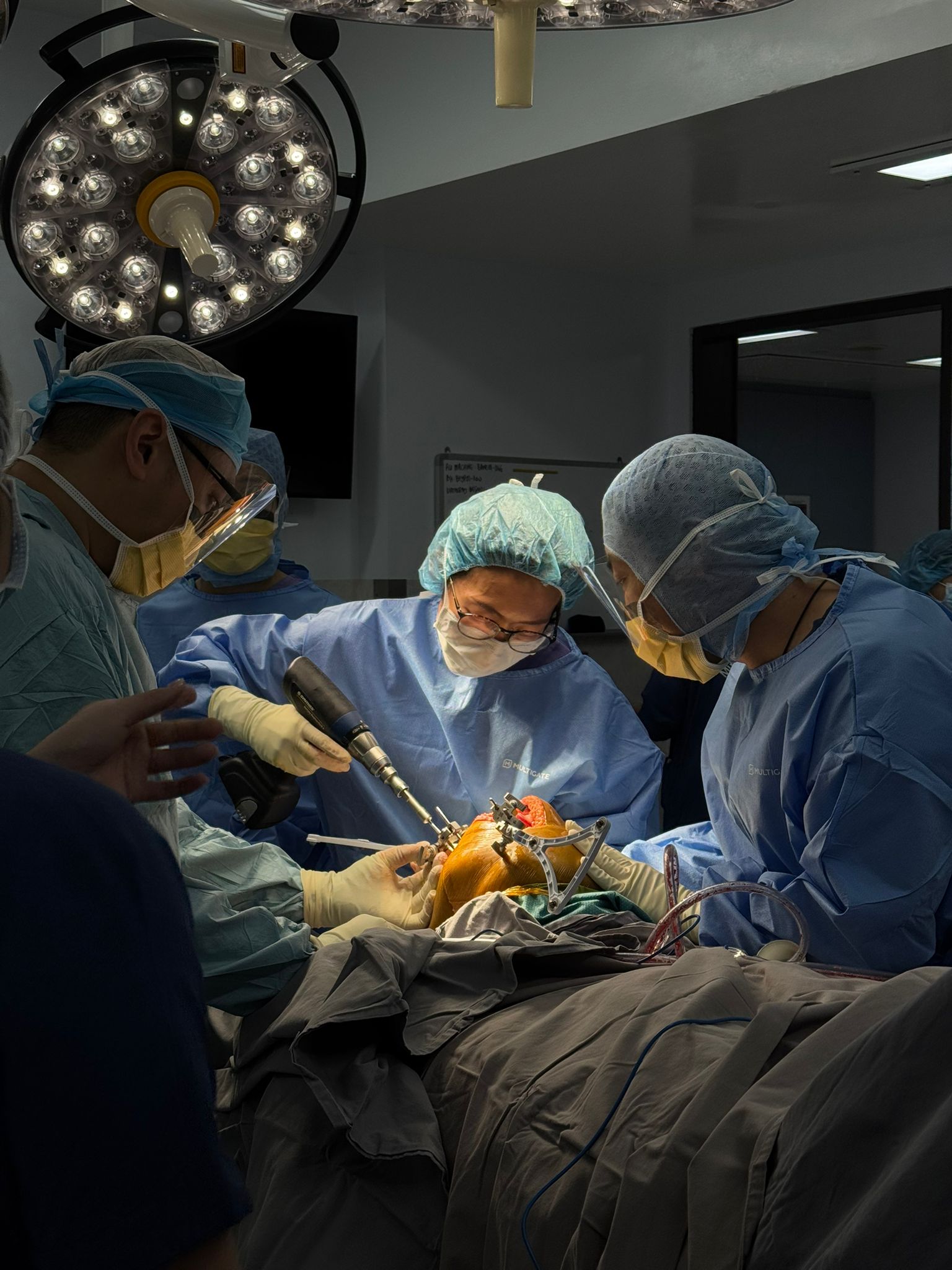
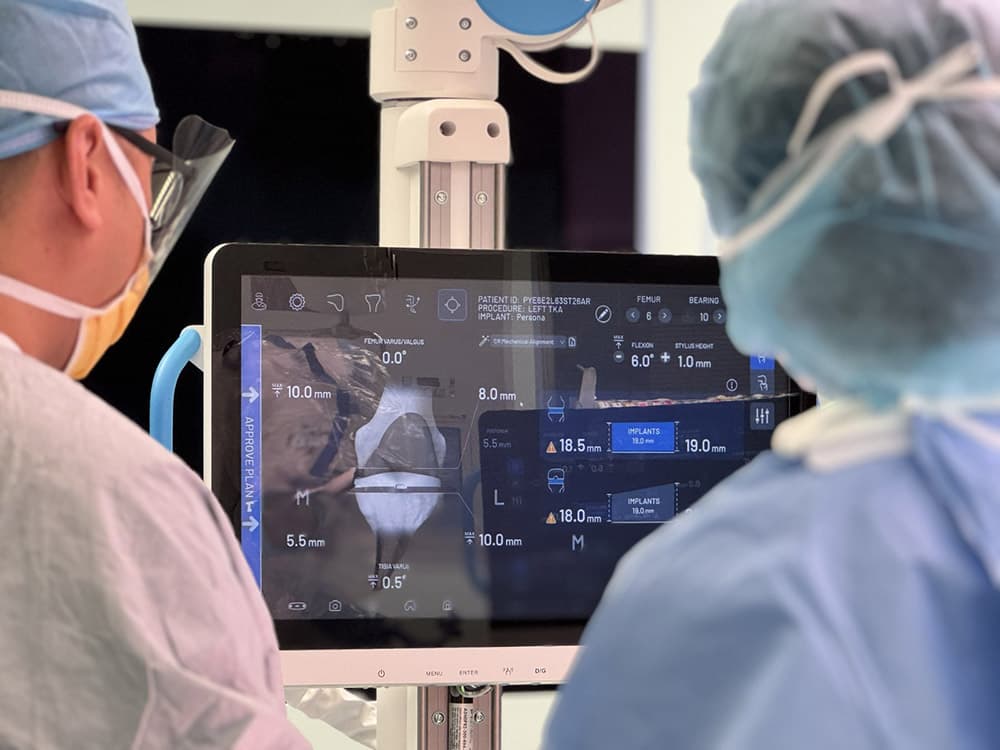
The robot does not perform the operation independently. The surgeon remains in control while the technology assists with surgical planning, bone preparation, alignment and implant positioning.
Robotic assistance can be particularly relevant to partial knee replacement because the artificial component needs to work with the remaining natural structures of the knee. Especially in younger patients, accurate positioning of the implant is critical as it needs to serve the patient throughout more cycles of knee movement over a longer remaining lifespan. Robotic technology facilitates that precision and accuracy.
Whether robotic assistance offers an advantage for an individual patient should be discussed with the orthopaedic surgeon rather than viewed as a separate type of knee replacement.
Estimated Cost of Unicompartmental Knee Replacement Surgery in Singapore
For patients considering knee replacement surgery in Singapore, treatment may be performed in public or private hospitals depending on the patient’s preference, insurance arrangements and clinical circumstances.
The cost can vary considerably according to the procedure, implant, hospital, length of admission, surgeon’s fees and whether additional technology is used.
Singapore’s Ministry of Health publishes hospital bill information for procedures including unilateral total knee replacement. Current published figures demonstrate substantial differences between subsidised public, unsubsidised public and private hospital settings, so patients should obtain a personalised estimate rather than relying on a single advertised price.
MediSave may also be used towards eligible inpatient and surgical expenses, subject to the prevailing withdrawal limits and surgical classification. MOH states that the claimable amount for an eligible inpatient operation combines the applicable hospitalisation limit with the surgical withdrawal limit.
Patients with Integrated Shield Plans should check their individual policy, panel arrangements, pre-authorisation requirements, deductibles and co-insurance before surgery.
How Does a Surgeon Decide Between Partial and Total Knee Replacement?
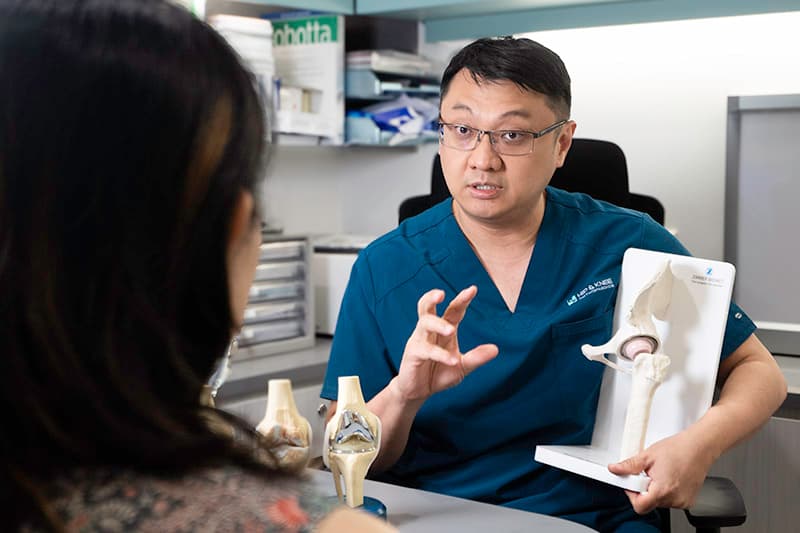
The decision usually involves more than looking at an X-ray.
An orthopaedic surgeon will consider where the patient experiences pain, the degree and distribution of arthritis, knee alignment, range of movement and ligament stability.
Weight-bearing X-rays are particularly useful because they show the joint while the patient is standing and can help determine whether cartilage loss is localised or widespread.
The patient’s expectations are important as well. Treatment for someone hoping simply to walk comfortably around the neighbourhood may involve different considerations from a patient hoping to return to golf, cycling or frequent travel.
Ultimately, the procedure should be matched to the knee.
So, Which Knee Replacement Is Right for You?
Partial knee replacement may be suitable when arthritis is limited to one compartment and the rest of the knee remains healthy and stable. Total knee replacement is generally more appropriate when arthritis affects several parts of the joint or produces more extensive deformity and stiffness.
Age can influence the decision, but there is no age at which a patient automatically becomes a partial or total knee replacement candidate.
A patient in their 50s may require total knee replacement, while a carefully selected patient in their 70s may be suitable for partial replacement.
The most important question is therefore not:
“How old am I?”
but:
“How much of my knee is actually affected?”
An assessment by an orthopaedic surgeon, together with weight-bearing imaging, can determine whether continued non-surgical treatment, partial knee replacement or total knee replacement is the more appropriate option.