

Medically reviewed by Dr Tan Sok Chuen at Hip & Knee Orthopaedics
It usually starts with a sentence we’ve heard hundreds of times.
“I was playing football last weekend…”
Sometimes it’s badminton. Sometimes pickleball. Sometimes a run around MacRitchie, a social basketball game, NS fitness training or a skiing holiday overseas. The story changes, but the next sentence is often remarkably similar.
“I don’t think it’s that bad because I can still walk.”
Or:
“The swelling has gone down, so I thought it was getting better.”
As knee surgeons in Singapore, these conversations are familiar. In fact, one of the biggest challenges isn’t treating a confirmed ACL tear – it’s helping patients recognise when a knee injury deserves more than rest, ice and another week of waiting.
The truth is that many sports injuries are minor and settle with time. Others – including a torn ACL – don’t. The difficulty is that in the first few days, they can feel surprisingly similar.
A mild ligament sprain, a torn meniscus and an ACL tear can all present with pain, swelling and difficulty walking. So how do you actually tell the difference? The answer often lies less in the pain itself, and more in how the injury happened and how the knee behaves afterwards.
That’s why, when someone comes into our clinic in Singapore after injuring their knee, we rarely begin by looking at the MRI. We usually start with a few simple questions.
Did You Feel or Hear a "Pop"?
This is one of the most useful clues we ask about, and one patients often remember vividly even weeks later.
Many people who go on to be diagnosed with an ACL tear describe a distinct pop or snap at the moment of injury — usually while twisting or pivoting with the foot planted, landing awkwardly from a jump, or after a direct blow to the outside of the knee during contact sport.
What tends to follow is also telling. ACL injuries often swell up quickly — within a few hours — rather than gradually over a day or two. That’s different from a lot of other knee injuries, where swelling builds more slowly. Rapid swelling after a twisting injury is one of the signs we take seriously.
What Exactly Happened?
The mechanism of injury often tells us more than people expect.
Did the knee twist while your foot stayed planted? Did you land awkwardly from a jump? Did another player collide with the outside of your knee? Or did the pain come on gradually after a long run, with no clear moment of injury at all?
Patients are sometimes surprised that we spend several minutes discussing the incident before we even examine the knee. That’s because different injuries tend to happen in different ways. A footballer who pivots suddenly before feeling the knee give way raises different concerns from a runner whose pain gradually builds after increasing mileage. Neither story alone gives us the diagnosis — but it points us in the right direction.
What Happened Over the Next Few Hours?
What happens after the injury is often just as important as the injury itself.
Did the knee swell before you even got home? Were you able to continue playing? Did the pain actually improve after a day or two? Or did you wake up the next morning unable to bend the knee properly?
One misconception we see regularly is the belief that less pain automatically means the injury is healing. Unfortunately, that’s not always true. Some patients with a significant ACL tear tell us the pain actually improved quite quickly. What brought them to clinic wasn’t pain — it was the fact that every time they tried to change direction, the knee felt unreliable.
They stopped trusting it. That’s an important distinction: pain and stability are not the same thing.
Do You Trust Your Knee?
This is perhaps the simplest question we ask, yet it’s often the most revealing. Not “does it hurt?” but “do you trust your knee?”
If you hesitate before stepping off a curb, feel the knee buckle when turning, or avoid certain movements because you’re worried it might give way, that’s information we take seriously.
Many patients can still walk after tearing their ACL. Some can even cycle. Walking, by itself, doesn’t tell us very much. What matters is whether the knee behaves normally when you ask it to do what it was designed to do — support you as you twist, turn, climb stairs or change direction.
Loss of confidence in the knee is often one of the earliest clues that an ACL tear, rather than a simple sprain, may have occurred.
The Mistake We See Most Often
Perhaps the most common mistake isn’t returning to sport too early. It’s assuming that because the swelling has settled, the injury has healed.
We’ve seen patients who rested for two weeks, felt much better, and returned to football feeling confident — only for the first sharp turn to cause the knee to give way again. Only then did they seek medical advice.
Sometimes the diagnosis is still straightforward. Occasionally, though, repeated instability from an undiagnosed ACL tear has placed additional stress on the meniscus or joint cartilage, turning what could have been a contained injury into a more complex one.
That doesn’t mean every patient who delays treatment will make their injury worse. But it does illustrate why persistent instability after a sports injury deserves proper assessment — ideally with a knee specialist in Singapore experienced in ACL injuries — rather than repeated attempts to “test” the knee during sport.
If You Suspect an ACL Tear
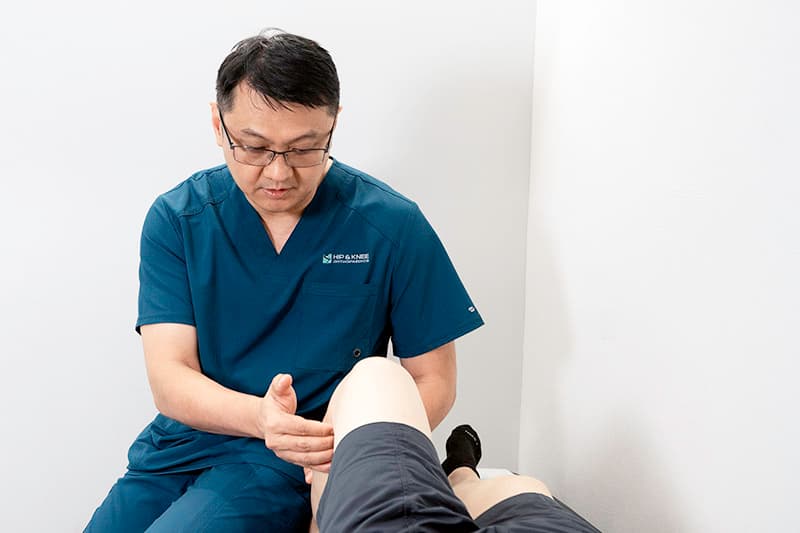
An ACL tear can’t be confirmed by symptoms alone — a clinical examination and, usually, an MRI are needed to know for certain, and to check whether the meniscus or cartilage has also been affected. If you’ve had a twisting knee injury with a pop, rapid swelling, or ongoing instability, it’s worth having it assessed properly rather than waiting to see if it settles on its own.
Learn more about ACL reconstruction surgery at Hip & Knee Orthopaedics.
Estimated Cost of ACL Surgery in Singapore
The cost of ACL surgery in Singapore varies widely depending on multiple clinical and administrative factors. Costs typically differ based on the hospital type, whether the procedure is performed as day surgery (same-day discharge) or requires inpatient admission, complexity of surgery, the type of graft used, surgeon seniority, ward class, duration of hospitalisation, rehabilitation requirements, and insurance coverage.
ACL surgery cost in Singapore is also influenced significantly by whether the surgery is performed in a restructured public hospital or one of the private hospitals. Public institutions offer subsidised rates based on citizenship and ward selection, whereas private facilities provide shorter wait times, personalised care, and access to senior specialists – usually at higher overall cost.
| Factor | Estimated Cost Range (SGD) |
| Surgeon’s Fees | $8,000 – $11,000 |
| Facility Fee (including Operating Theatre, Hospital Stay) | $8,000 – $10000 (day surgery) |
| Anaesthesia | $1500 – $2,000 |
| Graft Choice (Autograft/Allograft) | $0 – $4,000 (depending on graft, autografts) |
| Total Estimated Range | $17,000 – $25,000+ |
Additional costs may arise if other structures (such as meniscus or cartilage) are damaged and repaired during surgery. Insurance coverage, Medisave usage and personal hospital plans may reduce out-of-pocket expenses. As a Medisave-accredited facility, Hip & Knee Orthopaedics accepts a range of insurance plans, which you can verify here.
A personalised consultation will give the most accurate estimate based on your condition and treatment plan.