
Medically reviewed by Dr Adrian Lau Cheng Kiang, MBBS, MRCSEd, MMed (Ortho), FRCSEd (Trauma & Ortho) – Orthopaedic Surgeon, Hip & Knee Orthopaedics
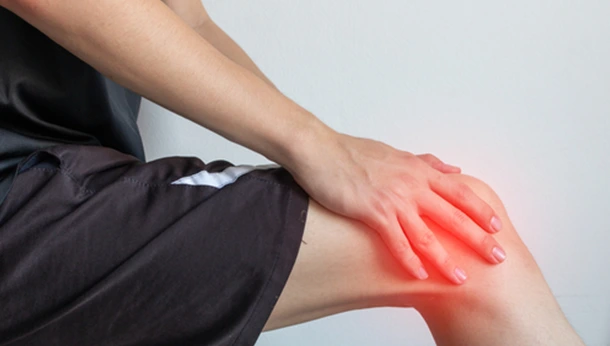
Most people who have a knee or hip replacement in Singapore get exactly what they hoped for: less pain, better sleep, and a return to walking, travelling and playing with the grandchildren. But a smaller group find that months after surgery, the joint still aches, feels unstable, swells, or has started hurting again after a good spell.
If that’s you, two things are worth knowing straight away. First, you’re not imagining it, and you’re not alone. Second, persistent pain after a joint replacement almost always has an identifiable cause, and many of those causes can be treated without another major operation.
This guide explains how to tell normal recovery from a problem, the most common reasons a replaced knee or hip keeps hurting, and what a proper second-opinion assessment in Singapore involves.
What is Normal Pain After a Knee or Hip Replacement?
Recovery from a joint replacement isn’t linear, and knees and hips recover at different speeds. As a general guide:
| Time after surgery | Knee replacement | Hip replacement |
|---|---|---|
| First 2–6 weeks | Significant pain, swelling and stiffness are expected; night pain is common | Pain settles quickly for most; aching around the thigh and buttock is common |
| 6 weeks – 3 months | Pain steadily reduces; swelling and warmth around the knee can persist | Most daily activities are comfortable; occasional aching after exertion |
| 3 – 6 months | Mild aching after activity; stiffness on getting up | Usually little to no pain |
| 6 – 12 months | Continued improvement; some swelling can linger for up to a year | Near full recovery for most patients |
Knee replacements generally take longer to settle than hip replacements. A knee that is still a bit warm and puffy at four months is often normal. A hip that is still painful at four months deserves a closer look.
The overall direction matters more than any single day. **Normal recovery trends better week by week, even with ups and downs.** Pain that plateaus at a high level, steadily worsens, or returns after you’d recovered well is the signal to get assessed.
Warning Signs That Need Prompt Medical Attention
See your surgeon, or a hip and knee specialist, without waiting for your next scheduled review if you notice any of the following:
– Fever or chills together with a painful replaced joint
– Increasing redness, warmth or swelling around the joint, especially if it was settling before
– Wound discharge, a wound that reopens, or a small hole near the scar that leaks fluid
– Pain that returns after months or years of a comfortable joint
– Sudden inability to bear weight, particularly after a fall
– A sensation of the joint giving way, or a hip that clunks or feels like it has slipped out
– Calf pain and swelling, or sudden breathlessness (these can indicate a blood clot; seek emergency care at an A&E)
If you have fever with a hot, swollen replaced joint, this should be seen the same day. Infection in a joint replacement is far easier to treat when it is caught early.
Why Does My Replaced Knee or Hip Still Hurt? Common Causes

Persistent pain after a joint replacement usually falls into one of two groups: problems with the joint replacement itself, and problems coming from somewhere else.
Problems with the joint replacement
1. Infection (prosthetic joint infection)
Infection is uncommon, affecting roughly 1–2% of knee and hip replacements, but it is the cause that most needs to be ruled out. It can appear within weeks of surgery, or years later if bacteria travel through the bloodstream from an infection elsewhere, such as a urinary tract, skin or dental infection. Not every infected joint is red and hot; low-grade infections can show up as nothing more than persistent pain and stiffness. People with diabetes, a higher body weight, or a weakened immune system face a higher risk.
2. Loosening of the implant
Over time, the bond between the implant and the bone can weaken. This typically causes pain when you start walking or stand up from a chair (“start-up pain”), and is more common many years after surgery. It can also be a sign of underlying low-grade infection.
3. Instability
A knee replacement that feels wobbly, gives way on stairs, or swells repeatedly after activity may have soft tissues that are too loose. In the hip, instability can mean repeated dislocations or a feeling that the joint is about to slip out.
4. Stiffness (arthrofibrosis)
Some knees develop excessive scar tissue and simply won’t bend or straighten enough, making stairs, squatting or getting in and out of a car painful. This is most treatable when picked up within the first few months.
5. Implant position or size
Occasionally the components are positioned or sized in a way that overloads the surrounding soft tissues. In the knee, this commonly shows up as pain at the front of the kneecap. In the hip, it can cause a leg-length difference or groin pain from a tendon rubbing against the socket.
6. Fracture around the implant (periprosthetic fracture)
A fall can break the bone around a joint replacement. Because many joint replacement patients in Singapore are older adults, sometimes with osteoporosis, even a simple slip at home can cause this. It needs specialist assessment, as treatment depends on whether the implant itself is still secure.
Problems from outside the joint
Not all pain around a replaced joint comes from the replacement itself. These causes are easy to overlook:
– Referred pain from the spine. A nerve pinched in the lower back can cause pain in the buttock, thigh or knee. Many patients with hip arthritis also have spinal wear and tear, and once the hip is replaced, the back pain can become more noticeable.
– Tendon and bursa problems. Inflammation of the tendons or fluid sacs around the hip (such as trochanteric bursitis on the outer hip) or around the knee is a common, very treatable source of pain.
– Nerve irritation. Small skin nerves near the knee incision can cause sensitive or burning spots.
– The other joints. A bad hip can cause knee pain, and vice versa. Arthritis in the opposite knee or hip can also flare as you start walking more.
– Chronic pain sensitisation. In a small number of people who had severe pain for many years before surgery, the nervous system stays sensitised. This is a real, recognised condition that can be managed.
Working out which of these is responsible is the whole point of a careful assessment. It also explains why a scan that “looks fine” doesn’t necessarily mean there’s nothing to find.
What Happens at a Second-Opinion Assessment?
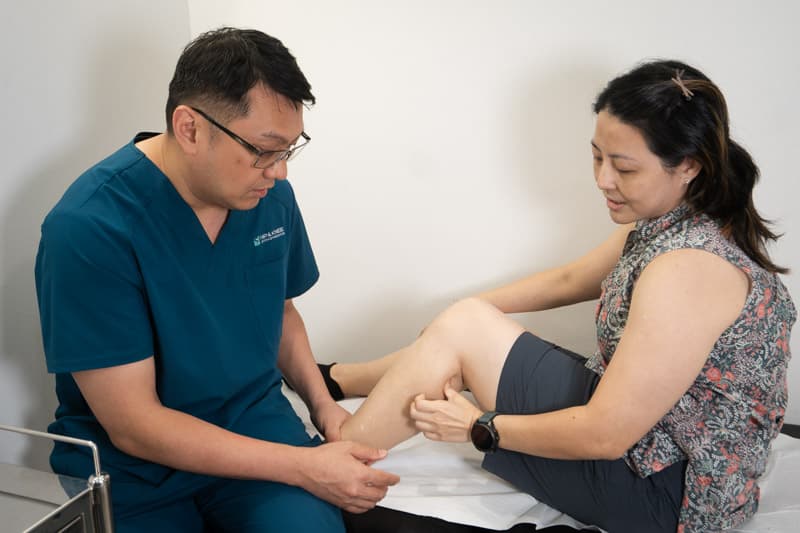
Many patients feel awkward about seeking a second opinion, especially if they had surgery elsewhere. In Singapore, this is a routine, accepted part of care, and a thorough assessment usually covers:
1. Your full story. When the pain started, whether there was ever a pain-free period, what makes it better or worse, any wound problems after surgery, and any recent infections or dental work.
2. Examination. Checking the wound, range of motion, stability, leg length, the spine, and nearby tendons, and comparing with the other side.
3. X-rays. Comparing new X-rays with earlier ones is one of the most useful ways to spot loosening, wear or changes in implant position. X-rays can usually be done on the same day.
4. Blood tests. Inflammation markers such as CRP and ESR help assess the likelihood of infection.
5. Joint aspiration, if infection is suspected. A small amount of fluid is drawn from the joint with a fine needle and sent for analysis and culture. At our clinic, ultrasound-guided aspiration can be performed in the clinic, often on the day of consultation.
6. Further imaging when needed. This may include a CT scan to check implant position, a specialised MRI that reduces interference from metal, or a nuclear medicine bone scan.
What to bring to your appointment
To make the most of your visit, bring as much of the following as you can:
– Your operation report and discharge summary (you can request a medical report from the hospital where you had surgery; an administrative fee usually applies)
– Your implant record card or sticker, which lists the make and model of your joint replacement
– Previous X-rays or scans on a CD or via the hospital’s image-sharing portal
– A list of your current medications, including any antibiotics taken since surgery
Avoid starting antibiotics for joint pain before you’ve been assessed, unless a doctor has advised it for another reason. Antibiotics can mask an infection and make it harder to identify the bacteria involved.
Treatment Options: Surgery is Not the Only Answer
The right treatment depends entirely on the cause. Broadly, options range from:
Non-surgical treatment
– Targeted physiotherapy to address muscle weakness, gait problems or stiffness
– Medication adjustment for nerve-related or inflammatory pain
– Ultrasound-guided injections for tendon or bursa inflammation around the joint
– Management of spinal or nerve-related causes, together with the appropriate specialist where needed
Smaller procedures
– Manipulation under anaesthesia or keyhole release of scar tissue for a stiff knee, ideally within the first few months
– Washout and change of the plastic liner for an early infection, which can sometimes save the original implant if done promptly
Revision surgery
When the implant is loose, infected beyond early treatment, worn, badly positioned or unstable, revision surgery may be recommended. This involves replacing some or all of the original components. Revision is a more complex operation than a first-time replacement and is usually performed by surgeons with subspecialty experience in complex joint reconstruction. For established infections, revision is sometimes done in two stages, with a temporary antibiotic spacer placed between operations.
A good assessment should leave you understanding why your joint hurts and what each option realistically offers, including the option of not operating if the expected benefit is small.
Can I Use MediSave or Insurance for Investigations and Revision Surgery?

In general, yes. Revision joint replacement is a recognised surgical procedure in Singapore, and MediSave can be used towards the surgical and hospitalisation costs, subject to the applicable withdrawal limits. MediShield Life and Integrated Shield Plans may also cover eligible inpatient treatment, subject to your policy terms, pre-authorisation and co-payment requirements.
If your original surgery was done at another hospital or overseas, it’s worth checking with your insurer how your policy treats follow-up or complication-related surgery. Our clinic team can help you check coverage with your insurer before any procedure.
Reducing the Risk of Problems After Joint Replacement
While not every complication can be prevented, these habits help protect your joint replacement in the long term:
- Treat infections early. Don’t ignore a urinary tract infection, skin infection or infected wound elsewhere on the body.
- Prevent falls. Use non-slip mats in the bathroom, keep walkways clear, and consider grab bars, especially in HDB flats with wet bathroom floors.
- Look after your bones. Ask about bone density screening if you’re at risk of osteoporosis.
- Keep your weight and blood sugar in check, as both affect infection risk and implant wear.
- Attend follow-up reviews, even when you feel well. Routine X-rays can detect wear or loosening before it causes symptoms.
Getting a Second Opinion at Hip & Knee Orthopaedics
At Hip & Knee Orthopaedics, our practice includes revision hip and knee replacement, prosthetic joint infection and periprosthetic fractures: the complex cases that are often referred on by other surgeons. Both Dr Lau and Dr Tan Sok Chuen hold subspecialty fellowship training in hip and knee replacement and consult in English and Mandarin.
We see patients who had their surgery with us, at other hospitals in Singapore, and overseas. Our approach is the same throughout: find the cause first, explain it clearly, and only recommend surgery when it is genuinely likely to help.