Follow us on
Search
Follow us
Search
Detailed diagnosis in a single visit

Knee Evaluation and Treatment

Knee evaluation is mandatory if you are suffering from instability or pain in the knee. Seek immediate consultation with Hip & Knee Orthopaedics and get your detailed diagnosis, X-ray, and complete consultation in a single visit.

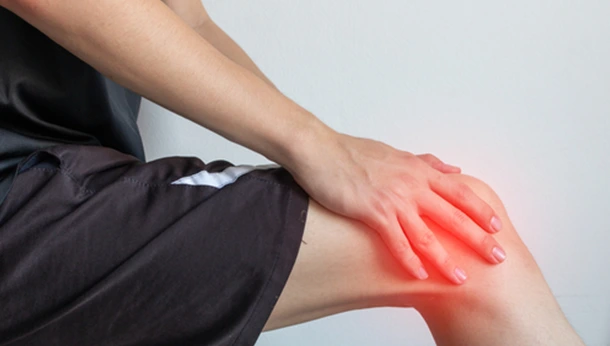
Experiencing Pain in Your Knee?

When Should I Seek Treatment for My Knee Pain?

Persistent Pain and Swelling

Locked Knee

Knee instability

Difficulty weight bearing/limping

Knee Symptoms and Evaluation

Problems of the knee often manifest in one of several ways:

  1. Pain over the front of knee when climbing up and down stairs.
  2. Pain over the back of the knee when making a full bend of the knee.
  3. Recurrent swelling of knee, especially after activity.
  4. Feeling that the knee is unstable or weak.
  5. Feeling that something is catching in the knee.
  6. Cracking sounds in the knee.
Related Information

A detailed history-taking and clinical examination can help to localise the pathology that leads to the
knee symptoms.

Pain can arise from the following anatomical regions:

  1. Tendons – most commonly over the patella tendon, also known as patella tendinopathy. These are usually due to overuse injuries, and can be treated with rest, physiotherapy and PRP injections.
  2. Meniscus - there are two meniscii in each knee and they act as shock absorbers. Twisting injuries can results in tears in the meniscus and unstable or large tears should be repaired to prevent further injuries to the underlying cartilage.
  3. Cartilage - this is a layer of smooth solid coating in the knee joint. This can arise from traumatic sports injuries or from age-related changes, though more commonly seen in the latter. Having a meniscus or ligament tear can predispose to accelerated cartilage wear with continual physical activity. Advanced cartilage wear leads to osteoarthritis
  4. Synovitis – this means that there is inflammation over the inner coating of the joint that produces synovial fluid or joint fluid. Synovitis can arise from gout, infection or inflammatory arthropathies such as rheumatoid arthritis.

After taking a detailed history and clinical examination, imaging in the form Xrays or MRIs may be required to add critical information in the analysis of your clinical problems.

Once evaluation is completed, we will advise you on further treatment. Treatment options can range from oral anti-inflammatory medications and muscle relaxants, to recommendations for physiotherapy for appropriate knee stretches and strengthening exercises, to injections, keyhole knee arthroscopic surgery, partial joint replacements to muscle-sparing total joint replacement surgery.

At Hip & Knee Orthopaedics, we recommend treatment options based on your disease condition and your clinical profile, and we believe in doing so, we can achieve clinical success and patient satisfaction. Both our doctors are double-fellowship trained, with extensive experience in managing complex hip and knee problems, thus are well-positioned to evaluate and manage your knee pain.
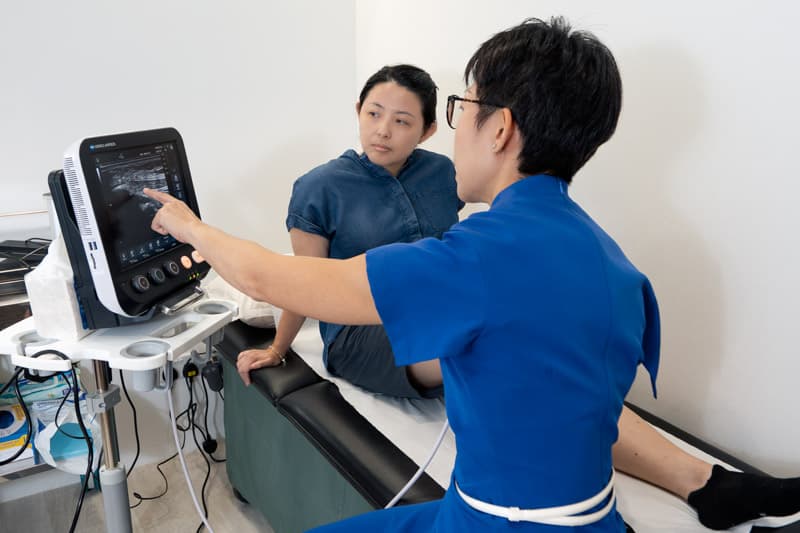
Screening for New Patients

Single Knee

$235 exclusive of GST

Evaluation of Knee Pain with X-ray

Includes the following done on the same day:
Consultation
X-ray single knee – weightbearing AP, lateral, skyline view; and
Review in clinic after X-ray
Both Knees

$275 exclusive of GST

Evaluation of Knee Pain with X-ray

Includes the following done on the same day:
Consultation
X-ray both knees – weightbearing AP, lateral, skyline view; and
Review in clinic after X-ray
Step by Step Guide

What to Expect at Your Knee Evaluation

A knee evaluation at Hip & Knee Orthopaedics is designed to find the cause of your knee problem in a single visit. Your consultation, X-ray and review of results are all done on the same day, so you leave with an answer and a plan instead of a string of follow-up appointments.

Step 1: Your History

Your specialist will start by asking about your symptoms. Typical questions include:

  • Where exactly the pain is: front, back, inner or outer side of the knee
  • How it started, whether from a twist, a fall, a sports injury, or gradually over time
  • What makes it worse, such as stairs, squatting, kneeling or long walks
  • Whether the knee swells, locks, catches or gives way
  • Any previous injuries, treatments, injections or surgery

Many knee conditions follow recognisable patterns. Pain on stairs points toward the kneecap joint, and locking points toward a meniscus tear, so this conversation often narrows down the cause before any test is done.

Step 2: Physical Examination

Your specialist will examine both knees so the painful side can be compared with the healthy side. Depending on your symptoms, this may include:

Examination What it checks
Walking and standing alignment Bow-legged or knock-kneed alignment, limping
Range of motion Stiffness, or loss of full bending or straightening
Swelling and joint-line tenderness Fluid in the joint, meniscus or cartilage problems
Ligament stability tests (e.g. Lachman, drawer, stress tests) ACL, PCL, MCL and LCL injuries
Meniscus tests (e.g. McMurray) Torn or unstable meniscus
Kneecap tracking and apprehension Anterior knee pain, patella instability

Step 3: Same-Day Weight-Bearing X-rays / MRI Scans

X-rays are taken while you are standing, because this shows how your knee behaves under your body weight. Each view shows something different:

  • AP (front) view: joint space narrowing, which is the clearest sign of cartilage wear and osteoarthritis
  • Lateral (side) view: bone spurs, kneecap height and the overall shape of the joint
  • Skyline view: the kneecap’s position in its groove, which matters for anterior knee pain and kneecap instability

X-rays show bone and joint space but not soft tissue. If your history and examination suggest a ligament, meniscus or cartilage injury, an MRI scan may be recommended. If the knee is very swollen and gout or infection is suspected, joint fluid may be drawn and tested.

Step 4: Diagnosis and Treatment Plan

Once your X-rays are back, you’ll review them with your specialist on the same visit. You’ll get a clear explanation of what is causing your symptoms and a treatment plan. That plan may involve rest and medication, physiotherapy, injections, keyhole surgery or joint replacement, and only what your condition actually requires.

Preparing for Your Visit

  • Wear shorts or loose trousers that can be rolled above the knee
  • Bring any previous X-rays, MRI scans or reports, since this can avoid repeat imaging
  • Bring a list of your current medications and any allergies
  • If you’re claiming under MediSave or an Integrated Shield Plan, bring your policy details
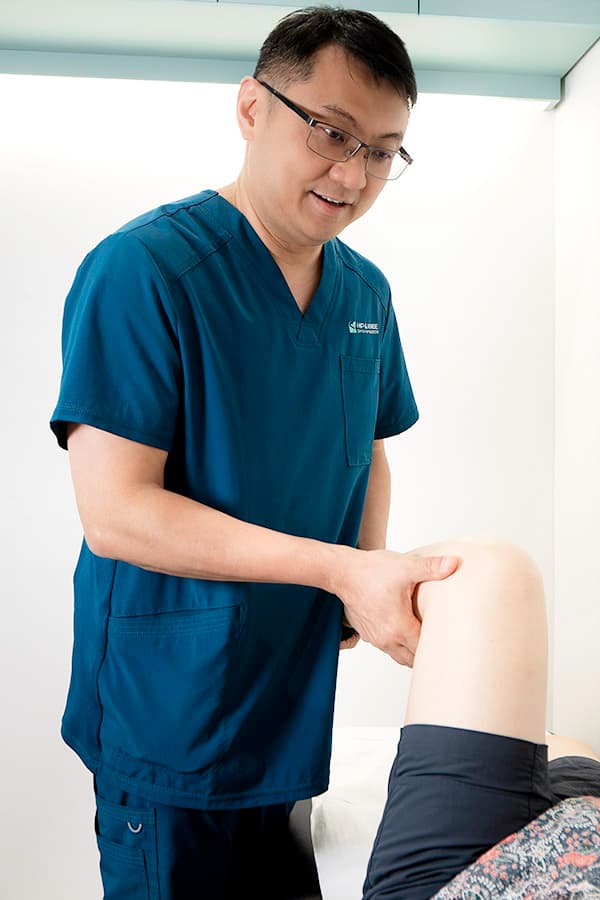
Dr Adrian Lau examines the patient's knee

Medisave & Integrated Shield Plans Approved

Great Eastern
NTUC Income
Prudential
Medisave
Singlife
HSBC Life
Let Us Help with Your Knee Issues

Consult Our Knee Specialists

Enquire with Us or Call +65 8884 1642.

Image link

Dr Adrian Lau

Knee Specialist in Singapore

Dr Adrian Lau is a specialist orthopaedic surgeon trained in primary and complex hip and knee arthroplasty.

•  MRCSEd Member (Royal College of Surgeons of Edinburgh)

•  MBBS (Bachelor of Medicine and Bachelor of Surgery)

•  MMed (Ortho) Master of Medicine (Orthopaedic Surgery)

•  FRCSEd (Trauma & Ortho) Fellowship of the Royal College of Surgeons of Edinburgh in Trauma and Orthopaedic Surgery

•  Member of the Sports Medicine Association Singapore

Image link

Dr Tan Sok Chuen

Knee Specialist in Singapore

Dr Tan is an orthopaedic doctor with subspecialty training in hip and knee surgery – making her the first female hip and knee replacement surgeon in Singapore.

• MBBS (Bachelor of Medicine and Bachelor of Surgery)

• MRCSEd Member (Royal College of Surgeons of Edinburgh)

• MMed (Ortho) Master of Medicine (Orthopaedic Surgery)

• FRCSEd (Trauma & Ortho) Fellowship of the Royal College of Surgeons of Edinburgh in Trauma and Orthopaedic Surgery