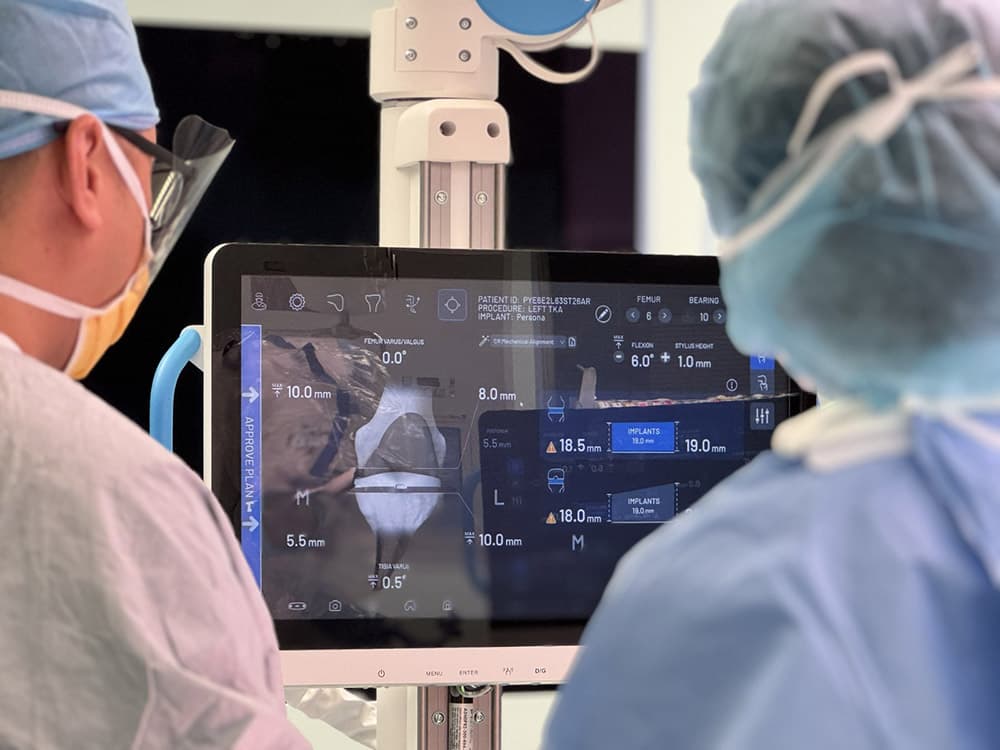

If you’ve been researching knee replacement surgery, you’ve probably come across the term robotic-assisted knee replacement. It sounds futuristic and, understandably, many patients imagine a robot independently performing the operation.
The reality is much simpler – and much more reassuring.
The robot does not replace your orthopaedic surgeon. Instead, it is an advanced surgical tool that helps your surgeon plan and perform knee replacement surgery with greater precision while remaining in complete control throughout the procedure.
Understanding how robotic knee replacement technology works can help you make a more informed decision about your treatment and focus on what truly matters: achieving a stable, well-functioning knee that allows you to return to the activities you enjoy.
The Biggest Misconception About Robotic Knee Replacement
One of the most common questions we hear is:
“Will a robot be operating on my knee?”
The answer is no.
Every stage of robotic-assisted knee replacement is planned, guided and performed by an experienced orthopaedic surgeon. The robotic system provides real-time information, detailed measurements and computer-assisted guidance, allowing the surgeon to make highly precise adjustments during the operation.
Think of it like a pilot using advanced navigation technology. The technology provides valuable information, but the pilot remains firmly in control of the aircraft.
Why Precision Matters in Knee Replacement Surgery
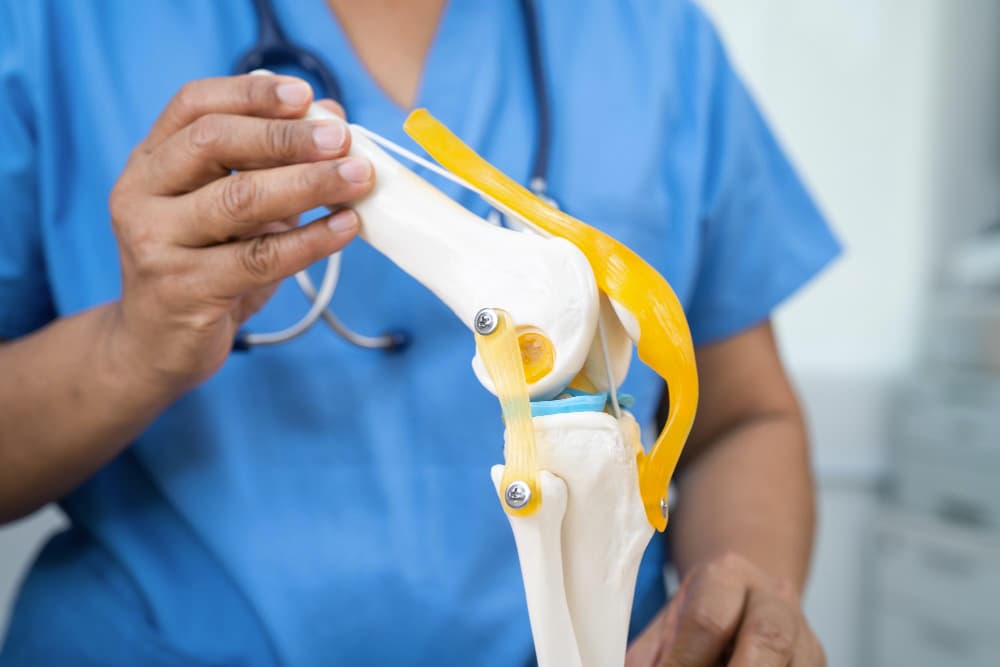
Your knee is more than a simple hinge. It is a complex joint that allows you to walk, climb stairs, squat, turn and maintain balance.
When arthritis damages the joint, the smooth cartilage wears away, leading to pain, stiffness and reduced mobility.
The goal of knee replacement surgery is not simply to replace worn surfaces. It is to recreate a stable, well-balanced knee that moves as naturally as possible.
Small differences in implant positioning and soft tissue balancing can influence:
- Knee stability
- Walking mechanics
- Range of motion
- Comfort during daily activities
This is where robotic-assisted technology can support the surgeon by providing additional data and precision throughout the procedure.
How does Robotic-Assisted Knee Replacement Work?
Before surgery, imaging studies and specialised planning software are used to create a detailed understanding of your individual knee anatomy.
During the operation, the robotic system helps the surgeon:
- Assess your unique knee alignment
- Plan implant positioning
- Evaluate ligament balance
- Guide bone preparation
- Make precise adjustments throughout the procedure
The surgeon continuously evaluates this information and makes all final decisions based on their experience, clinical judgement and your specific anatomy.
Every Knee is Different
One reason robotic-assisted surgery has gained popularity is that no two knees are exactly alike.
Some patients have naturally bow-legged alignment, while others have knock knees. Some have arthritis affecting only one compartment of the knee, while others have widespread cartilage loss.
Rather than applying a one-size-fits-all approach, robotic planning allows the surgeon to tailor the operation to each patient’s anatomy and functional goals.
Does Robotic Knee Replacement Mean Faster Recovery?

Many patients hope robotic surgery will guarantee a quicker recovery.
While robotic assistance may improve surgical precision, recovery still depends on several important factors:
- Your overall health
- Muscle strength before surgery
- Physiotherapy participation
- Post-operative activity levels
Successful knee replacement is always a partnership between the surgeon, physiotherapist and patient.
Is Robotic Knee Replacement Suitable for Everyone?
Not every patient requires robotic-assisted surgery and suitability depends on several factors including:
- The type and severity of knee arthritis
- Previous knee operations
- Bone quality
- Overall medical condition
An experienced orthopaedic surgeon will recommend the most appropriate surgical approach after a comprehensive assessment rather than assuming robotic assistance is the best option for every patient.
What Should You Really Look For?
When choosing a knee replacement surgeon, it is easy to focus on technology alone.
However, the most important factor is still the expertise of the surgeon using that technology.
Patients should consider:
- Fellowship training in hip and knee surgery
- Expertise in robotic-assisted techniques
- Individualised treatment planning
- Comprehensive rehabilitation support
- Long-term follow-up care
Technology is a valuable tool, but it is the surgeon’s experience, judgement and decision-making that ultimately determine the quality of the operation.
The Bottom Line
Robotic-assisted knee replacement represents an exciting advancement in modern orthopaedic surgery, providing surgeons with enhanced planning and precision during knee replacement procedures.
But perhaps the most important thing to remember is this:
The robot is not performing your surgery. Your orthopaedic surgeon is.
The combination of surgical expertise, personalised planning, advanced technology and structured rehabilitation offers patients the best opportunity to relieve pain, restore mobility and return to the activities that matter most—whether that means climbing stairs comfortably, travelling with family or simply enjoying a morning walk without knee pain.
If persistent knee pain is limiting your daily life despite medication, physiotherapy or injections, a specialist consultation can help determine whether conservative treatment, robotic-assisted knee replacement or another approach is the most appropriate solution for your individual needs.
This article was reviewed by Dr Adrian Lau, Specialist Orthopaedic Surgeon at Hip & Knee Orthopaedics.